How do you create separation, storage, and functionality in a single open room without adding walls? A studio apartment organization system must define zones, activate vertical storage systems for small rooms, and integrate multi-functional furniture. Without structure, one-room layouts lose efficiency quickly.
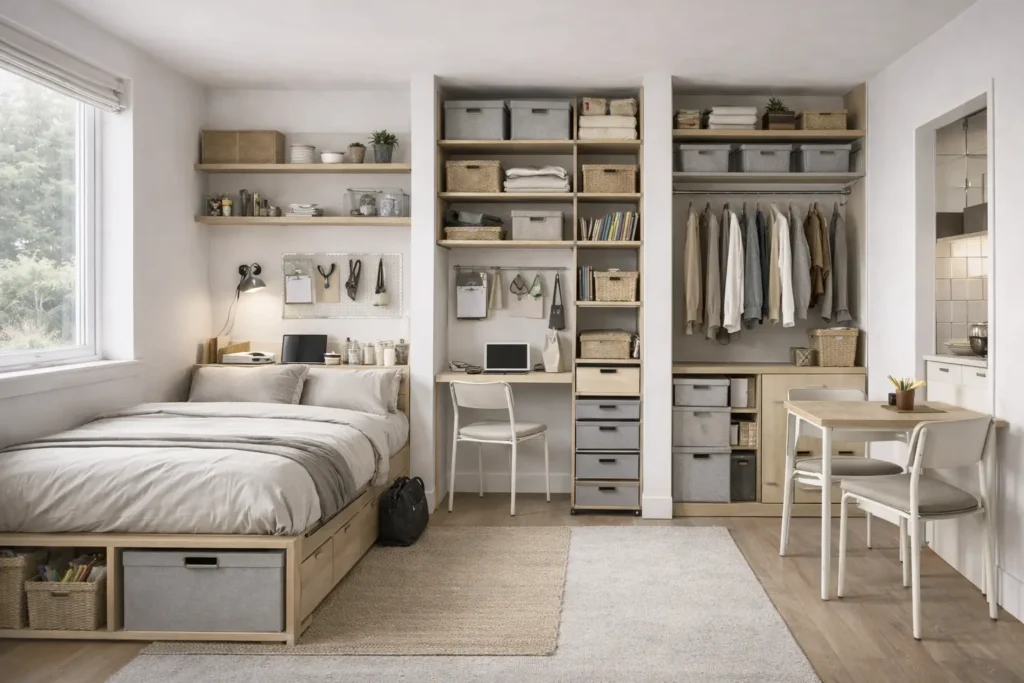
A studio requires intentional layout planning and controlled storage density.
Common Causes of Studio Apartment Disorganization
Studio layouts fail for structural reasons.
No Defined Functional Zones
Sleeping, working, and dining blend together. Items overlap.
Overuse of Horizontal Space
Furniture expands outward instead of upward.
Lack of Integrated Storage
Beds and sofas are not used for storage.
Poor Closet Optimization
Closets remain single-rod, underutilized.
No Vertical Activation
Walls and upper sections remain empty.
A studio apartment organization system solves these problems by restructuring layout flow.
Studio Apartment Organization System for Functional Zoning
A studio apartment organization system must separate functions visually and physically.
Sleep Zone
Use:
- Storage bed frames with drawers.
- Hydraulic lift beds.
- Low-profile metal platform frames.
- Bed skirts with concealed storage.
- Anti-dust encasements for under-bed storage solutions.
Place bed along wall to preserve circulation.
Work Zone
Use:
- Wall-mounted fold-down desks.
- Floating narrow desks (14–18 inches depth).
- Pegboard systems above desk.
- Rolling drawer carts under desk.
- Wall rail systems for supplies.
Avoid full-depth office desks.
Dining or Multi-Use Zone
Use:
- Drop-leaf tables.
- Wall-mounted folding tables.
- Stackable dining chairs.
- Bench seating with internal storage.
Furniture must compress when not in use.
Storage Wall
Dedicate one wall to vertical systems:
- Floor-to-ceiling shelving.
- Modular cube systems.
- Adjustable track shelving.
- Rail-based wall storage.
- Tall narrow cabinets (10–14 inches depth).
Centralizing storage reduces visual clutter.
Studio Organization System for Small Apartments With Limited Storage
A studio organization system for small apartments must integrate storage into primary furniture and treat the closet as a structured module, using a small closet organization system instead of a single-rod default.
Lofted or Raised Bed Systems
If ceiling height allows:
- Lofted bed with workspace underneath.
- Raised platform with integrated drawer systems.
- Rolling storage cubes beneath frame.
This increases vertical capacity.
Convertible Sofa Beds With Storage
Use:
- Sofas with lift-up seat storage.
- Sectionals with hidden compartments.
- Modular seating cubes.
Multi-functional seating reduces need for extra furniture.
Sliding Partition Systems
Instead of walls:
- Ceiling-mounted curtain tracks.
- Sliding panel partitions.
- Open shelving room dividers.
These create visual zoning without reducing airflow.
Narrow Vertical Pantry Units
Use 10–12 inch depth tall cabinets near entry or kitchen wall.
Good for:
- Food storage.
- Cleaning supplies.
- Household overflow items.
Rolling Narrow Shoe Trays
Install low-profile wheeled trays under entry console or bed.
Good for:
- Shoes.
- Seasonal footwear.
Keeps floor clear.
Immediate Fixes to Improve a Studio Apartment Organization System
Apply fast adjustments.
- Remove oversized coffee tables.
- Replace full desk with fold-down unit.
- Install double closet rods.
- Add under-bed sealed bins.
- Install one vertical shelving wall.
- Introduce rolling storage carts.
- Mount hooks behind doors.
These changes increase compact apartment organization immediately.
Preventive Adjustments for Long-Term Studio Efficiency
Studios degrade without maintenance structure.
Maintain Clear Zoning Rules
Work materials do not enter sleep area.
Use Height-Based Segmentation
Lower: daily use.
Middle: weekly use.
Upper: seasonal storage.
Limit Open Storage
Closed bins reduce visual noise.
Rotate Seasonal Clothing
Store off-season clothing in vacuum-sealed bags under bed.
Reevaluate Every 90 Days
Adjust layout based on usage patterns.
A studio apartment organization system remains effective when zoning discipline is preserved.
Mistakes to Avoid in Studio Apartment Layout Planning
Blocking Natural Light
Tall shelving must not cover windows.
Overcrowding With Small Furniture
Too many small pieces increase fragmentation.
Using Deep Cabinets
Depth beyond 16 inches reduces walking clearance.
Ignoring Vertical Closet Expansion
Install:
- Pull-down closet rods.
- Adjustable closet track systems.
- Hanging shelf organizers.
- Stackable drawer cubes.
Vertical closet activation increases small bedroom storage efficiency.
Failing to Define Entry Storage
Use:
- Wall-mounted hooks.
- Slim console with storage.
- Shoe trays.
Entry clutter spreads quickly in studios.
System Upgrade: The Structured Studio Framework
Apply this five-step framework.
Step 1 — Define Core Functions
Sleep. Work. Eat. Store.
Step 2 — Assign Physical Boundaries
Use shelving or partitions to separate zones.
Step 3 — Activate Vertical Surfaces
Install:
- Floor-to-ceiling shelving.
- Rail systems.
- Pegboards.
- Tall cabinets.
Step 4 — Integrate Furniture Storage
Choose:
- Storage beds.
- Convertible seating.
- Drop-leaf tables.
Step 5 — Protect Circulation
Maintain at least 24–30 inches of walking path.
This framework converts open layouts into controlled compact bedroom organization systems.
Conclusion
A studio apartment organization system maximizes usable space by combining zoning, vertical storage, and integrated furniture solutions. Floor-to-ceiling shelving, lofted beds, sliding partitions, and narrow cabinets increase capacity without expanding footprint. Clear zoning prevents functional overlap. Vertical activation increases storage density. Controlled furniture selection preserves circulation.
Structure replaces square footage.
Key Takeaways
- Define functional zones immediately.
- Activate vertical walls before adding new furniture.
- Use storage-integrated beds and sofas.
- Install double closet rods and track systems.
- Use sliding partitions for visual separation.
- Keep walkways clear.
- Rotate seasonal storage quarterly.