How do you store blankets in a small apartment without filling closets, chairs, or storage bins too quickly?
Many small homes have limited closet capacity. As blankets accumulate for different seasons, they often end up stacked on chairs, beds, or inside already crowded wardrobes.
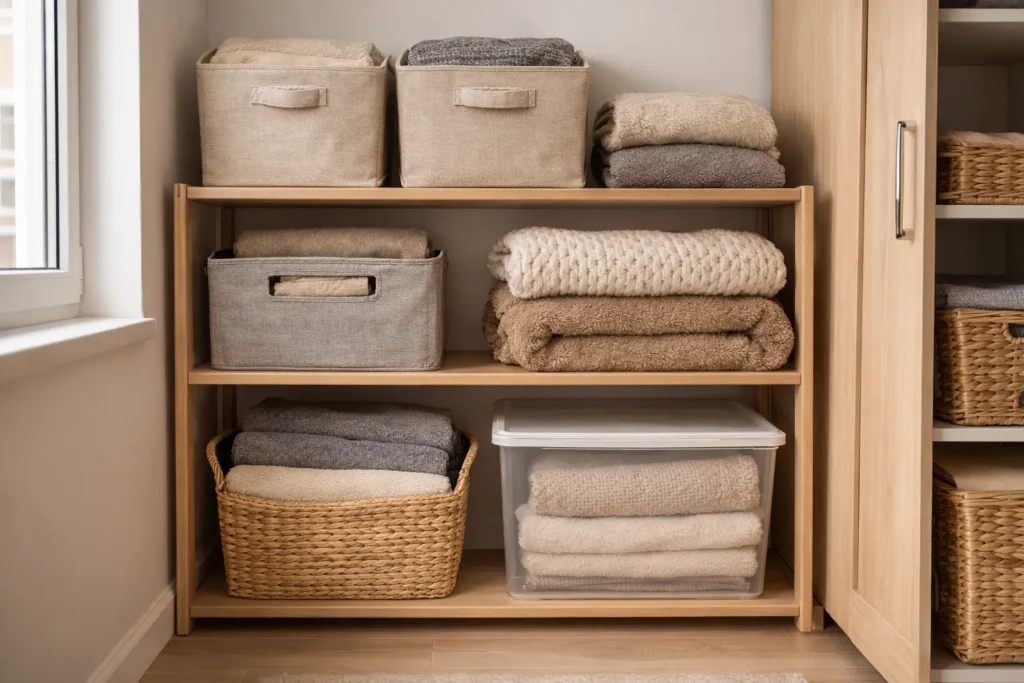
Learning how to store blankets in a small apartment requires creating clear storage zones and choosing systems that match the available space. The objective is not to increase storage capacity but to organize blankets in a way that keeps them accessible while preventing clutter.
Many of the same principles used to organize blankets also apply to other everyday items. Creating simple storage zones and container systems is essential when learning how to store things in a small apartment without creating clutter.
Several practical storage methods make this possible even in compact apartments.
How to Store Blankets in a Small Apartment Efficiently
Blankets occupy more volume than many other household items. When they are folded loosely or stored without structure, they quickly consume available space.
In small apartments, several factors increase the difficulty of storing blankets efficiently:
- limited closet shelving
- lack of linen closets
- seasonal blanket rotation
- bulky fabrics such as fleece or wool
- shared storage with bedding or towels
As a result, blankets often migrate between rooms. Some remain on sofas, others stay on beds, and additional ones end up in random storage bins.
Without a defined storage system, blankets gradually spread across the apartment.
How to Store Blankets in a Small Apartment Using Vertical Storage
Vertical storage is one of the most efficient ways to store blankets when floor space is limited.
Instead of placing blankets inside large containers, vertical systems allow them to be folded compactly and stored upright.
Practical vertical solutions include:
- tall shelving units
- vertical closet organizers
- stackable fabric boxes
- wall-mounted storage baskets
- vertical cubby systems
To maximize efficiency, blankets should be folded tightly into rectangular shapes before being placed vertically.
This approach creates several advantages:
- easier visual identification
- faster access to specific blankets
- better use of vertical wall space
- reduced stacking pressure
Vertical storage also prevents blankets from forming unstable piles that collapse when one item is removed.
Best Containers to Store Blankets in a Small Apartment
Storage containers help compress blankets while protecting them from dust.
However, not all containers are suitable for small apartments. Large plastic bins often waste space because they cannot adapt to narrow storage areas.
Better container options include:
Fabric storage cubes
- flexible shape
- lightweight structure
- easy to stack on shelves
Under-bed storage containers
- use unused bed space
- ideal for seasonal blankets
- reduce closet congestion
Vacuum storage bags
- compress bulky blankets
- reduce volume significantly
- useful for winter blankets
Foldable linen boxes
- structured but lightweight
- easy to label and stack
Storage ottomans
- combine seating and storage
- practical for living rooms
When choosing containers, the goal is not simply to hide blankets but to maintain a system that allows quick access and easy rotation.
Container-based storage becomes even more important when multiple items compete for limited space. Shoes, blankets, and seasonal accessories often require separate storage systems to prevent overcrowding in closets.
Storage Zones That Work for Blankets in Small Homes
Blankets should be stored according to how frequently they are used.
Creating zones prevents unnecessary movement between rooms.
A simple zoning system can include:
Daily use blankets
Store in the living room or bedroom.
Options include:
- sofa baskets
- storage ottomans
- small decorative bins
Seasonal blankets
Store in compressed containers.
Possible locations:
- under the bed
- upper closet shelves
- hallway cabinets
Guest blankets
Store in dedicated storage containers.
Typical locations:
- closet shelves
- labeled linen boxes
- stackable bins
Separating blankets by frequency reduces clutter and prevents overloading a single storage area.
Compact Folding Methods for Blanket Storage
Blankets take less space when folded correctly.
Loose folding wastes space and causes blankets to expand inside containers.
Two folding methods are especially effective.
Compact Rectangle Fold
Steps:
- Spread the blanket flat.
- Fold lengthwise once or twice.
- Fold into a tight rectangle.
- Compress air while folding.
This shape fits well in shelves and storage cubes.
Vertical File Fold
Steps:
- Fold blanket lengthwise.
- Continue folding until a narrow rectangle forms.
- Place vertically in storage containers.
This method allows multiple blankets to be stored upright, similar to files in a drawer.
Benefits include:
- faster access
- easier visual organization
- reduced stacking pressure
How to Maintain a Blanket Storage System Over Time
Even well-organized storage systems can break down if blankets are not returned to their designated zones.
Maintaining the system requires a few consistent practices.
Useful habits include:
- returning blankets immediately after use
- rotating seasonal blankets twice per year
- compressing bulky blankets before storage
- limiting the total number of blankets stored
- labeling containers when multiple categories exist
A simple storage structure is easier to maintain than complex systems that require frequent adjustments.
When blankets always return to the same storage location, clutter is far less likely to accumulate.
Many small apartments rely on simple space-saving adjustments rather than large storage furniture. Small storage improvements applied consistently can significantly reduce clutter over time.
Conclusion
Storing blankets in small apartments becomes difficult when blankets are placed randomly across rooms or stacked without structure.
A practical solution focuses on three elements:
- vertical storage
- container-based organization
- clear storage zones
These strategies allow blankets to remain accessible while reducing the amount of space they occupy.
With a defined system, even small apartments can store multiple blankets without creating visual clutter or overcrowded closets.
Key Takeaways
- Blankets occupy significant storage volume and require structured storage systems.
- Vertical storage improves space efficiency in small apartments.
- Fabric cubes, vacuum bags, and under-bed containers work well for blanket storage.
- Creating storage zones prevents blankets from spreading across rooms.
- Compact folding methods reduce the space blankets occupy.
- Maintaining a simple storage system prevents long-term clutter.