Small kitchen organization ideas are necessary when limited cabinet space, crowded counters, and inefficient layouts begin affecting daily cooking routines. In compact kitchens, poor storage structure quickly turns into repeated clutter. Drawers become layered. Cabinets lose visibility. Counter space shrinks.
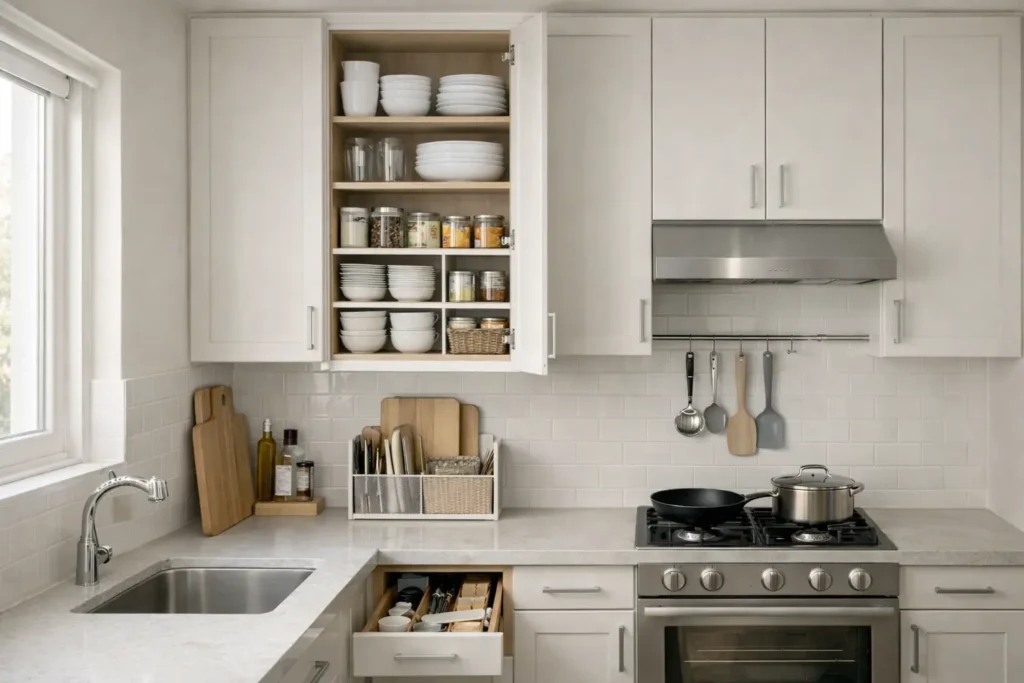
Effective organization in a small kitchen depends on defined zones, vertical optimization, and controlled storage categories. The objective is not to make the kitchen look larger. The objective is to make it function efficiently within its existing footprint.
Common Causes of Small Kitchen Disorganization
Most compact kitchens experience similar structural issues.
1. Lack of Defined Kitchen Zones
When prep tools, cookware, pantry items, and cleaning supplies mix randomly, retrieval time increases. Items are stored wherever space appears available rather than where they are used.
2. Underutilized Cabinet Height
Upper cabinets often have unused vertical gaps. Without risers or stackable systems, space above plates or bowls remains empty.
3. Deep Cabinet Blind Spots
Items placed at the back of deep shelves are forgotten. This leads to duplication and expired goods.
4. Overcrowded Counter Surfaces
To compensate for limited cabinets, appliances and containers move to the countertop permanently. This reduces workspace and increases visual clutter.
5. Drawer Compression
Utensils and small tools overlap without dividers. Access becomes inefficient.
Each cause increases friction. Friction leads to disorganization.
Small Kitchen Organization Ideas That Improve Storage Capacity
These small kitchen organization ideas focus on increasing usable storage without renovation.
1. Divide the Kitchen into Functional Zones
Establish four core zones:
- Food Preparation Zone
- Cooking Zone
- Cleaning Zone
- Pantry Storage Zone
Store items based on frequency and proximity. For example:
- Cutting boards, knives, and mixing bowls near prep space
- Pots, lids, and cooking utensils near stove
- Cleaning cloths and detergents under sink
- Dry goods centralized in one pantry section
Zoning reduces unnecessary movement and keeps categories contained.
2. Expand Vertically Inside Cabinets
Cabinet height can often be doubled with:
- Stackable shelf risers
- Vertical plate racks
- Adjustable interior shelving
- Hanging mug hooks
Inside tall cabinets, vertical dividers can separate baking trays, cutting boards, and lids.
Vertical organization prevents stacking and increases visibility.
Similar vertical storage systems for small rooms apply the same principle by converting unused height into functional storage capacity.
3. Optimize Under-Sink Storage
Under-sink areas often become disorganized due to plumbing obstacles.
Use:
- Tiered pull-out trays
- Slim vertical bins
- Tension rods for spray bottles
Separate cleaning supplies from dish tools. Avoid storing unrelated items in this zone.
4. Use Narrow Gaps Strategically
Small kitchens often have narrow unused spaces between appliances or cabinets.
Install:
- Slim rolling carts
- Spice racks
- Vertical bottle storage
These narrow inserts add storage without expanding footprint.
Optimizing Small Kitchen Layout for Daily Workflow
Storage structure must align with movement patterns.
Inefficient Layout vs Structured Layout
| Inefficient Kitchen | Structured Kitchen |
|---|---|
| Random cabinet grouping | Zone-based grouping |
| Appliances permanently on counter | Stored vertically when not in use |
| Deep shelves without bins | Pull-out containers |
| Mixed pantry and cookware | Dedicated pantry section |
Layout optimization focuses on reducing unnecessary steps. When items are grouped by task, cooking time decreases.
Immediate Fixes Using Small Kitchen Organization Ideas
If a full reorganization is not possible, implement targeted corrections.
Remove Low-Frequency Tools
Eliminate gadgets used fewer than three times per year.
This reduction step follows the same logic used in other compact spaces, such as small bathroom storage solutions, where limited storage capacity requires strict volume control.
Reassign One Drawer
Install dividers and define strict categories.
Introduce Clear Pantry Containers
Uniform containers improve visibility and stacking efficiency.
Install Over-Cabinet Hooks
Add hanging capacity without drilling.
Use Lazy Susans in Corner Cabinets
Corner cabinets often waste rotational space. Rotating trays improve access.
These changes create measurable improvements quickly.
Preventive Adjustments to Maintain Order
Organization degrades without maintenance.
Weekly Five-Minute Reset
Return misplaced items to their zone.
Quarterly Cabinet Audit
Review pantry goods and remove expired items.
One-In-One-Out Tool Rule
Avoid accumulation of duplicate utensils.
Label Interior Shelves
Temporary internal labeling reduces drift in shared kitchens.
Consistency preserves structure.
Mistakes to Avoid When Applying Small Kitchen Organization Ideas
Common errors reduce long-term success.
Buying Organizers Before Decluttering
Excess items must be reduced before containers are added.
Ignoring Cabinet Depth
Deep cabinets require pull-out bins. Otherwise, items disappear behind layers.
Overloading Vertical Storage
Vertical systems must remain accessible. Overstacking reduces function.
Mixing Food and Cleaning Zones
Cross-category storage increases clutter and inefficiency.
Function must guide placement.
Structured Micro-Framework: The Compact Kitchen Control System
To simplify decision-making, apply this four-step structure:
Step 1 — Reduce Volume
Remove duplicates and low-frequency items.
This principle mirrors broader strategies used in decluttering for small apartments, where reducing item volume is the first step before reorganizing storage.
Step 2 — Define Zones
Assign each cabinet a clear functional category.
Step 3 — Elevate Storage
Use risers, vertical racks, and slim inserts.
Step 4 — Maintain Weekly
Reset misplacements before they accumulate.
This system avoids complexity while improving capacity.
Conclusion
Small kitchen organization ideas become effective when applied systematically. Defined zones, vertical expansion, cabinet optimization, and routine resets transform limited space into structured storage.
Compact kitchens do not require expansion. They require deliberate structure.
Key Takeaways
- Divide the kitchen into functional zones.
- Use vertical storage to increase cabinet capacity.
- Optimize under-sink and corner areas.
- Limit countertop exposure.
- Apply weekly resets.
- Avoid buying organizers before reducing excess items.