Small bedroom organization plan requires a structured system when limited space forces furniture, clothing, and personal items to compete for the same area. In compact bedrooms, even small amounts of disorganization quickly make the room feel crowded and inefficient.
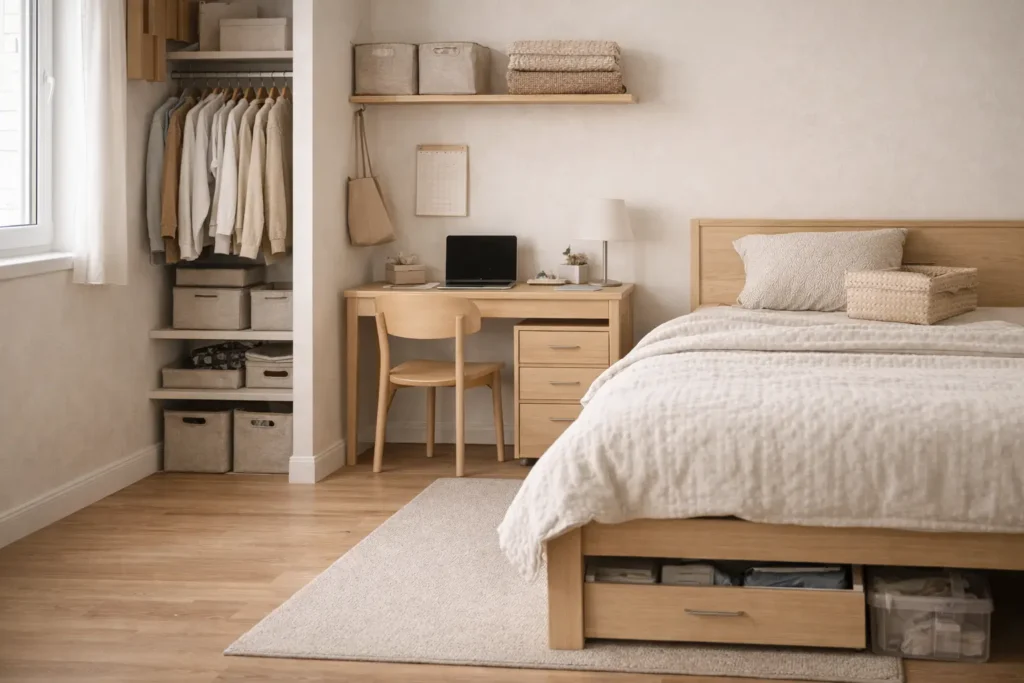
Without a defined structure, items begin to accumulate on surfaces, floors, and chairs. This pattern is closely related to why clutter keeps coming back in small apartments, where systems fail to support daily use. Closets become overloaded, storage areas become inconsistent, and daily routines start to slow down. In many cases, this problem is similar to what happens when people try to organize a small apartment with no storage and do not yet have a clear system for placing everyday items.
A small bedroom organization plan solves this problem by dividing the room into clear storage zones and assigning a specific purpose to each area. When storage systems are defined in advance, it becomes easier to maintain order without constantly reorganizing the room.
Instead of relying on temporary solutions, a structured plan creates predictable placement for clothing, accessories, and daily-use items.
Why Small Bedrooms Become Disorganized Quickly
Small bedrooms tend to lose organization faster than larger rooms because they contain several competing functions.
A typical bedroom may serve as:
- Sleeping area
- Clothing storage
- Personal storage
- Work or study space
- Dressing area
When these functions overlap without clear boundaries, objects begin to spread across surfaces and floors.
Limited storage capacity also contributes to the problem. Closets in small bedrooms are usually designed for basic clothing storage, not for additional items such as bags, seasonal clothing, or accessories.
Another common issue is horizontal clutter. Nightstands, dressers, and desks become temporary holding areas for objects that do not have assigned storage locations.
Without a structured system, these small accumulations eventually create visual and functional clutter.
How a Small Bedroom Organization Plan Improves Space Use
A structured small bedroom organization plan improves the efficiency of the room by introducing predictable storage zones and reducing unnecessary item movement.
Instead of placing objects wherever space is available, the plan assigns each category of item to a defined storage location.
This approach improves several aspects of the room:
- circulation space
- storage accessibility
- visual order
- maintenance speed
When objects return to the same location after use, the room maintains its structure without requiring frequent reorganization.
A consistent system also prevents clutter from accumulating in corners or unused areas.
Defining Storage Zones in a Small Bedroom
A practical organization plan begins by dividing the bedroom into functional zones. Each zone should manage a specific category of items.
Typical storage zones include:
Clothing zone
Closets, wardrobes, and clothing racks belong to the clothing storage area. This zone manages everyday clothing, folded garments, and seasonal items.
Surface zone
Nightstands and small tables hold limited daily-use items such as lamps, books, or alarm clocks. Surfaces should remain mostly clear to prevent clutter buildup.
Accessory zone
Jewelry, belts, and small accessories require compact storage containers placed inside drawers or closet organizers.
Secondary storage zone
This area includes under-bed storage or upper shelves used for items that are not needed daily.
Separating these zones prevents storage overlap and simplifies maintenance. The same zoning concept is commonly used in broader home systems, including the strategies described in small apartment storage systems that actually work.
Small Bedroom Organization Plan for Clothing Storage
Clothing is usually the largest storage category in a bedroom. A small bedroom organization plan should prioritize efficient clothing management to prevent closets from becoming overloaded.
A practical approach divides clothing storage into three levels.
Daily-use clothing
These items should remain at eye level inside closets or wardrobes. This area should contain clothing used most frequently.
Secondary clothing
Occasionally used clothing can be placed on upper shelves or inside storage bins within the closet.
Seasonal clothing
Items not used during the current season can be stored in containers or under-bed storage.
Separating clothing by frequency of use reduces the time needed to access everyday items and prevents overcrowding in primary storage areas.
Furniture Placement for Better Bedroom Organization
Furniture arrangement plays a significant role in maintaining a small bedroom organization plan. Incorrect placement reduces available storage space and limits movement inside the room.
Several placement principles improve functionality.
Keep the center of the room open
The central walking path should remain clear to maintain easy movement.
Use wall-adjacent furniture placement
Beds, wardrobes, and dressers should remain aligned with walls to maximize floor space.
Limit the number of furniture pieces
Each furniture item should serve a clear storage or functional purpose.
Use vertical furniture
Tall shelving units increase storage capacity without expanding the room’s footprint.
These placement adjustments improve circulation while creating additional storage opportunities.
Under-Bed Storage in a Small Bedroom Organization Plan
Under-bed storage is one of the most efficient components of a small bedroom organization plan because it utilizes space that would otherwise remain unused.
This area is suitable for storing items that are used infrequently but still need to remain accessible.
Examples include:
- seasonal clothing
- spare bedding
- luggage
- storage containers
Storage boxes designed for under-bed use help maintain structure while protecting stored items from dust.
Beds with built-in drawers provide an even more organized storage option by dividing the space into compartments.
When used correctly, under-bed storage expands the room’s storage capacity without requiring additional furniture.
Maintaining the Small Bedroom Organization Plan
An organization system remains effective only when it is maintained consistently. Without simple maintenance habits, clutter gradually returns.
Several practices help maintain a small bedroom organization plan.
Return items immediately
Objects should return to their assigned storage location after use.
Limit surface storage
Nightstands and dressers should contain only essential items.
Review storage monthly
Occasionally removing unused objects prevents long-term accumulation.
Avoid introducing unnecessary containers
Too many storage containers can complicate the system rather than improve it.
Maintaining a simple and predictable structure ensures that the room remains organized with minimal effort.
Conclusion
A small bedroom organization plan works by dividing the room into clear storage zones and assigning specific locations to each category of items. Instead of relying on temporary placement, the plan creates a structured system that keeps objects accessible while preventing clutter.
Effective bedroom organization combines efficient clothing storage, practical furniture placement, and under-bed storage systems. These elements expand the room’s storage capacity without increasing the number of furniture pieces.
When storage zones remain consistent and items return to their designated locations, the bedroom maintains its organization with minimal maintenance.
These principles also support broader organization strategies such as learning how to store things in a small apartment efficiently.
Key Takeaways
- Small bedrooms become cluttered quickly when storage zones are undefined.
- A small bedroom organization plan divides the room into functional storage areas.
- Clothing should be organized by frequency of use to prevent closet overload.
- Furniture placement affects circulation and available storage space.
- Under-bed storage increases capacity without adding furniture.
- Limiting surface clutter improves visual organization.
- Consistent maintenance habits keep the system functional over time.