Small bathroom storage solutions are necessary when limited cabinets, narrow vanities, and minimal counter space start interfering with daily routines. In compact bathrooms, inefficient storage creates repetition. Products stack. Towels overflow. Backup inventory mixes with daily-use items.
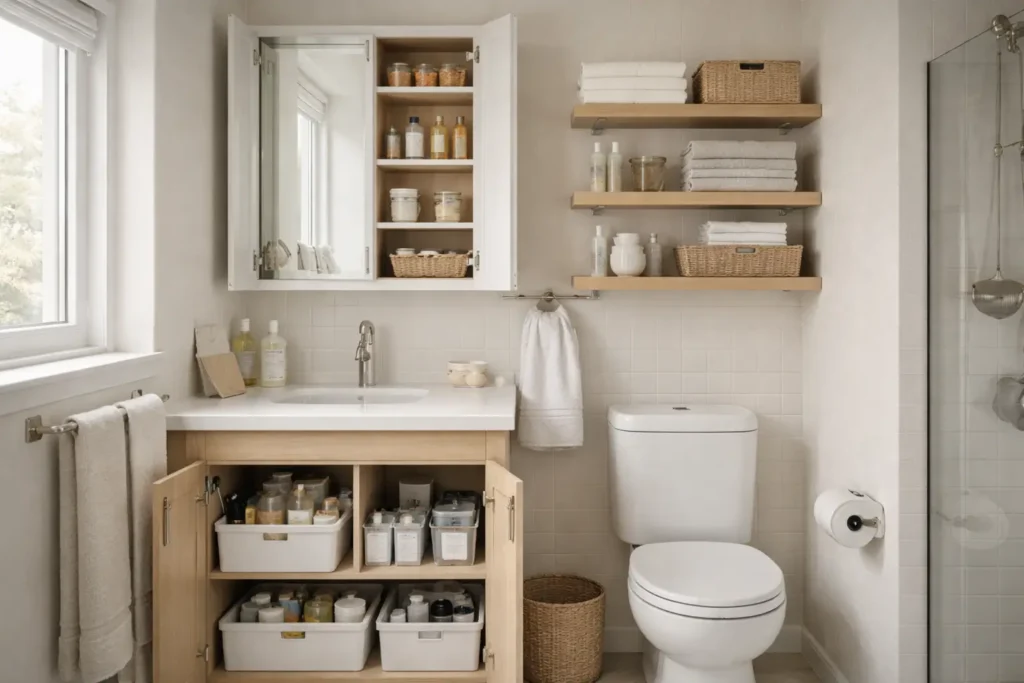
The goal is structured storage. Not decoration. Not aesthetic upgrades. Functional capacity.
Common Causes of Storage Breakdown in Small Bathrooms
Most compact bathrooms experience similar structural problems.
1. Overloaded Vanity Cabinets
Vanity cabinets often combine plumbing, cleaning supplies, cosmetics, and paper goods in the same space. Without separation, items block access.
2. Unused Vertical Wall Space
Walls above toilets, doors, and mirrors remain empty while base cabinets overflow.
This same vertical storage principle is widely applied in small kitchen organization ideas where unused cabinet height often becomes the primary opportunity to expand storage capacity.
3. Inefficient Medicine Cabinets
Medicine cabinets store mixed categories without internal dividers, reducing usable depth.
4. Narrow Floor Footprint
Small bathrooms often include tight pathways that limit freestanding storage.
5. Countertop Accumulation
Daily-use products remain exposed permanently, reducing sink usability.
Storage failure is rarely about size. It is about structure.
Small Bathroom Storage Solutions That Increase Cabinet Efficiency
Effective small bathroom storage solutions start inside existing cabinetry.
Optimize Under-Sink Layout
Use:
- Stackable pull-out drawers
- Tiered shelf inserts
- Clear labeled bins
- Narrow vertical organizers
Separate cleaning supplies from personal care. Allocate fixed zones.
Improve Medicine Cabinet Capacity
Medicine cabinets often waste depth.
Apply:
- Slim internal shelf risers
- Magnetic strips for small metal tools
- Uniform containers for skincare
- Door-mounted slim racks
Avoid mixing backup inventory with daily-use items.
Structure Narrow Vanities
In bathrooms with slim vanities:
- Use shallow drawer dividers
- Store vertically where possible
- Use narrow stackable trays
Limit drawer height stacking. Separation improves retrieval.
Small Bathroom Storage Solutions for Compact Spaces
In compact layouts, floor expansion is limited. Vertical expansion is mandatory.
Install Over-the-Toilet Shelving
This area provides one of the largest unused vertical zones. Install open shelves or enclosed cabinets depending on moisture exposure.
Use Corner Shelves
Corners above sinks or near showers can hold:
- Rolled towels
- Toiletry baskets
- Decorative but functional containers
Corner shelving converts dead space into active storage.
Add Door-Based Storage Systems
Use:
- Over-the-door hooks
- Hanging baskets
- Adhesive-mounted racks
Door systems work well for hair tools, brushes, and cleaning cloths.
Immediate Fixes Using Small Bathroom Storage Solutions
When reorganization time is limited, apply targeted adjustments.
Remove Expired and Duplicate Products
Clear volume before adding containers.
This volume reduction step follows the same principle used in under-bed storage solutions where hidden storage areas only function efficiently after excess items are removed.Clear volume before adding containers.
Reduce Countertop Exposure
Limit visible items to:
- Soap dispenser
- Toothbrush holder
- One grooming product
Everything else should be contained.
Assign One Category per Shelf
Prevent cross-category stacking.
Introduce Clear Backup Bins
Keep replacement paper goods separate from daily stock.
Use Slim Rolling Carts
In narrow gaps beside vanities, rolling carts provide vertical layered storage.
Immediate adjustments prevent compounding clutter.
Preventive Adjustments to Sustain Bathroom Organization
Organization degrades without maintenance rules.
Weekly Surface Reset
Return misplaced products to assigned zones.
Monthly Inventory Audit
Remove expired cosmetics and unused tools.
One-In-One-Out Policy
Prevent product accumulation.
Standardize Containers
Uniform bin sizes improve stacking and limit overflow.
Consistency protects structure.
Mistakes to Avoid When Applying Small Bathroom Storage Solutions
Avoid these errors.
Buying Organizers Before Decluttering
Excess inventory makes organizers ineffective.
Ignoring Humidity Resistance
Use moisture-resistant materials for shelving and bins.
Overloading Floating Shelves
Limit weight. Avoid visual congestion.
Storing Backup Stock at Eye Level
Reserve accessible areas for daily-use items.
Mixing Cleaning Chemicals with Hygiene Products
Separate by function.
Function defines placement.
System Upgrade: The Compact Bathroom Storage Framework
Apply this structured approach:
Step 1 — Reduce Volume
Remove expired and unused items.
This reduction strategy mirrors broader methods used in decluttering for small apartments where storage efficiency improves only after unnecessary volume is eliminated.
Step 2 — Categorize by Function
Daily use, grooming, cleaning, backup.
Step 3 — Expand Vertically
Use walls, doors, and vertical cabinet height.
Step 4 — Maintain Weekly
Reset structure before drift occurs.
This framework increases storage capacity without renovation.
Conclusion
Small bathroom storage solutions are effective when applied with structural discipline. Cabinet efficiency, vertical expansion, category separation, and controlled surfaces transform compact bathrooms into organized systems.
Storage is maximized through structure. Not expansion.
Key Takeaways
- Separate daily-use and backup inventory.
- Optimize under-sink and medicine cabinet depth.
- Use vertical wall and door space.
- Reduce countertop exposure.
- Apply weekly maintenance resets.
- Avoid buying organizers before reducing volume.