Trying to organize small apartment with no storage becomes difficult when there are no closets, cabinets, or built-in shelving systems. In compact apartments, everyday objects still need a place to go. When those places do not exist, items begin accumulating on tables, countertops, chairs, and other visible surfaces.
As a result, clutter appears quickly and maintaining order becomes time-consuming. Small apartments without storage require a different approach. Instead of relying on closets or cabinets, the space must be organized using structured storage systems.
Effective organization depends on creating defined storage zones, using vertical space, and controlling how daily objects move through the apartment. When these systems are applied consistently, even apartments with minimal storage can remain functional and organized.
Why Small Apartments With No Storage Become Cluttered
Small apartments without storage tend to become cluttered faster than larger homes. The reason is not necessarily the number of items but the absence of defined storage locations.
Everyday belongings such as bags, shoes, electronics, documents, and cleaning supplies require permanent storage areas. When these areas are missing, objects migrate between surfaces throughout the apartment.
Several patterns usually appear:
- Objects are placed temporarily instead of stored properly
- Multiple categories of items share the same space
- Horizontal surfaces become default storage areas
- Frequently used items move constantly between rooms
Over time, these patterns create visual clutter and make it harder to maintain organization. To organize small apartment environments without storage, the first step is replacing random placement with structured storage zones.
How to Organize a Small Apartment With No Storage Using Storage Zones
The most reliable way to organize small apartment with no storage is to divide the apartment into clear storage zones. Each zone is responsible for a specific category of items.
This prevents objects from spreading across the apartment.
Common storage zones include:
Entry zone
A small area near the entrance used for shoes, bags, and daily accessories.
Daily essentials zone
A designated location for items used frequently, such as keys, chargers, and headphones.
Cleaning zone
A single area for cleaning products and tools so they do not appear in multiple rooms.
Seasonal storage zone
A place for items used occasionally, including extra blankets, travel accessories, or seasonal clothing.
When these zones exist, every object has a predictable location. This reduces clutter and simplifies daily maintenance.
Vertical Storage Systems Replace Missing Closets
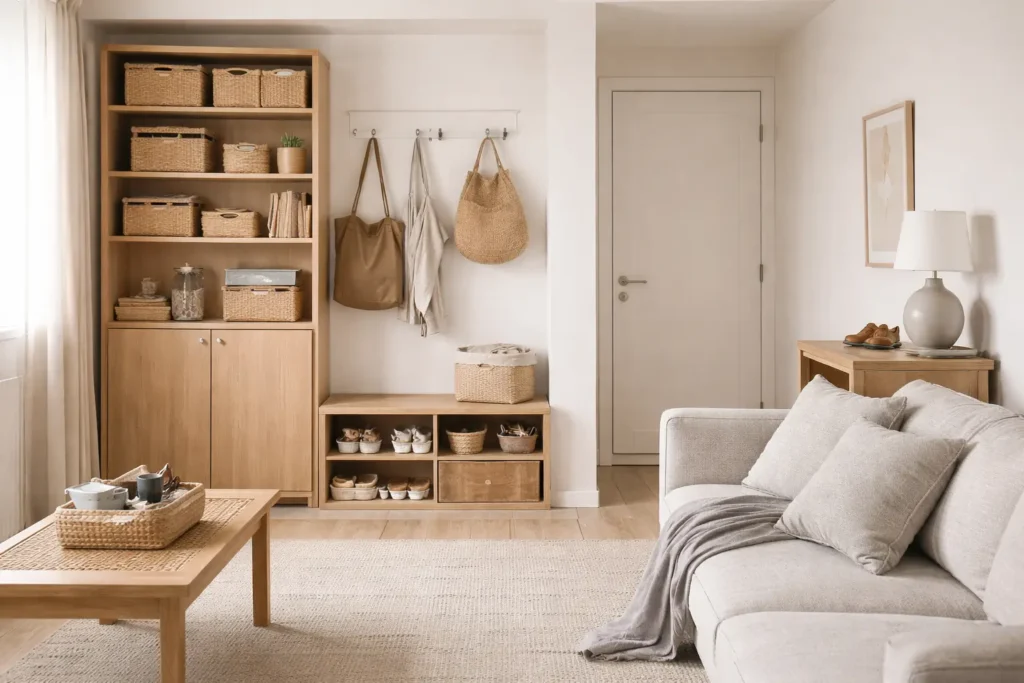
Vertical storage is one of the most effective strategies when organizing apartments without built-in storage. Installing vertical storage systems for small rooms allows walls to function as primary storage surfaces.
Most small apartments contain large unused wall areas. These vertical surfaces can support shelves, hooks, and modular storage systems that dramatically increase storage capacity.
Examples of vertical storage systems include:
- Floating wall shelves
- Tall shelving units
- Pegboard wall organizers
- Wall hooks for bags and jackets
- Over-door hanging organizers
Vertical storage works because it shifts storage upward rather than outward. This preserves floor space while creating multiple layers for storing items.
Placing frequently used objects at eye level and less used items on higher shelves improves efficiency and accessibility.
Hidden Storage Areas Increase Capacity
Hidden storage areas allow apartments with limited infrastructure to store more items without increasing visible clutter.
The most useful hidden storage area is under the bed. Low-profile containers can hold clothing, linens, or seasonal items while remaining out of sight.
Other hidden storage opportunities include:
- Storage benches with internal compartments
- Ottoman storage units
- Coffee tables with lift-top compartments
- Narrow storage cabinets placed in unused corners
- Over-door storage racks
Hidden storage works best for items that are not used daily. This allows frequently accessed objects to remain in visible zones while occasional items stay stored out of sight.
Containers Keep Open Storage Organized
Open shelving systems require containers to maintain structure. Without containers, shelves quickly become cluttered with mixed objects.
Containers group similar items together and prevent them from spreading across the apartment. Simple storage hacks for small spaces can further improve storage efficiency in compact apartments.
Useful container systems include:
- Fabric bins for clothing or textiles
- Small baskets for electronic accessories
- Stackable boxes for paperwork and documents
- Drawer organizers for personal items
Containers should always correspond to a specific category of items. Learning how to store things in a small apartment without creating clutter also helps maintain structured storage zones. Mixing unrelated objects within the same container reduces efficiency and makes it harder to maintain organization.
Neutral storage containers also reduce visual clutter and create a more consistent appearance in small spaces.
Reduce Surface Storage to Control Clutter
In apartments without storage, horizontal surfaces often become temporary storage areas.
Common surfaces affected include:
- Dining tables
- Coffee tables
- Kitchen counters
- Chairs
- Window ledges
When objects accumulate on these surfaces, the apartment appears cluttered even if the total number of items is relatively small.
Reducing surface storage helps restore visual order.
A useful rule is to allow only essential items to remain visible. Everything else should be stored in containers, shelves, or hidden storage zones.
This simple adjustment dramatically improves the appearance and functionality of small apartments.
Maintain a Simple Storage System
The most effective storage systems are simple and easy to maintain.
Complex storage solutions often fail because they require too much effort to sustain. In small apartments, organization systems should remain stable with minimal daily effort.
Three basic principles help maintain order:
- Every item has a designated storage zone
- Containers group similar objects together
- Frequently used items remain easily accessible
Applying these principles consistently allows small apartments without built-in storage to remain organized long term.
Conclusion
Learning how to organize small apartment with no storage requires replacing traditional closets and cabinets with structured storage systems. Instead of relying on built-in furniture, organization depends on creating functional storage zones, using vertical space, and taking advantage of hidden storage areas.
Containers maintain order within open shelving systems, while reducing surface storage prevents clutter from spreading across the apartment. When these systems are applied together, even compact apartments with limited infrastructure can remain organized and efficient.
Key Takeaways
- Small apartments without storage require defined storage zones.
- Vertical shelving systems replace traditional closets.
- Hidden storage areas increase capacity without adding clutter.
- Containers maintain order in open storage systems.
- Reducing surface storage improves visual organization.
- Simple storage systems are easier to maintain over time.