Entryway storage for small spaces becomes essential when compact homes lack dedicated areas for shoes, bags, coats, and everyday items. In small apartments, the entrance often functions as a transition zone between outside activities and the interior living space. When this area lacks structure, items accumulate quickly and create visible clutter near the front door.
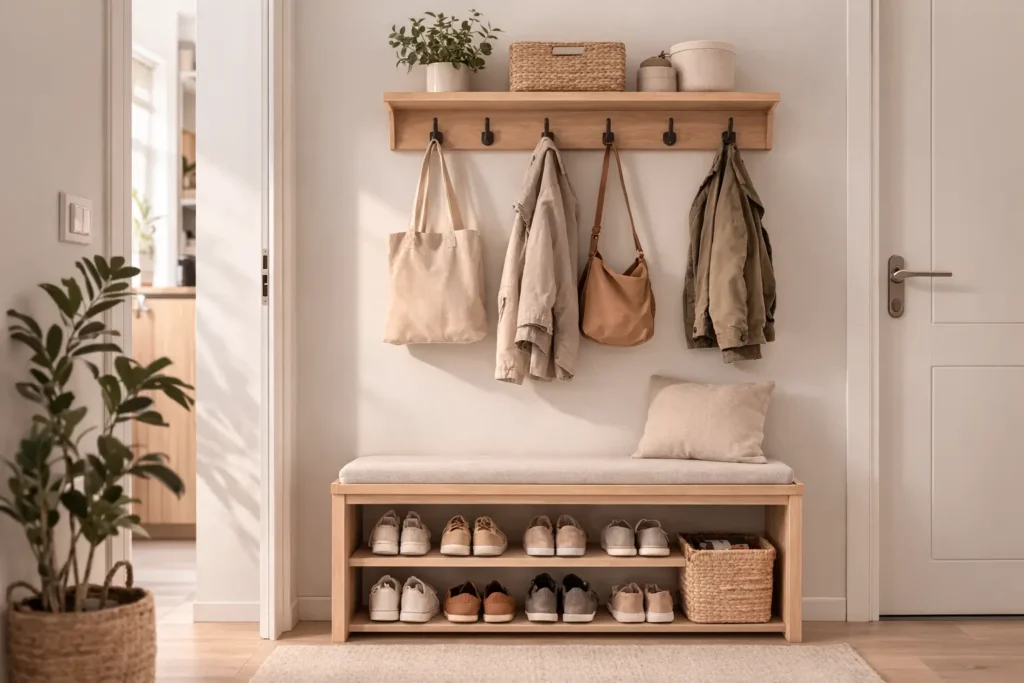
Without an organized entryway system, shoes spread across the floor, bags occupy chairs or tables, and frequently used objects have no consistent storage location. Many of the same principles used here also apply when learning how to store things in a small apartment without creating clutter. This causes unnecessary congestion in a part of the home that should remain accessible and easy to maintain.
Effective entryway storage for small spaces relies on compact systems that organize daily items without expanding the footprint of the entrance area. By using vertical storage, wall-mounted systems, and container-based organization, even narrow entryways can function as efficient storage zones.
Why Entryways Become Cluttered in Small Apartments
Entryways accumulate clutter because they serve multiple functions within a limited area. Residents often use the entrance to store shoes, coats, bags, keys, umbrellas, and mail. When these objects lack designated storage locations, the entryway quickly becomes disorganized.
Several conditions contribute to entryway clutter in small apartments:
• limited floor space
• absence of built-in storage
• shared use by multiple residents
• accumulation of frequently used items
• lack of vertical storage systems
Unlike other rooms, entryways experience constant item movement throughout the day. Objects enter the home with each arrival and leave again when residents depart. Without structured storage, items temporarily placed near the door tend to remain there.
As a result, the entryway becomes one of the most clutter-prone areas in compact homes.
Entryway Storage for Small Spaces Using Vertical Systems
Vertical organization is the most effective solution for entryway storage in small spaces. Instead of expanding horizontally across the floor, storage systems can use wall space to accommodate frequently used items.
Common vertical entryway storage systems include:
• wall-mounted coat hooks
• vertical shelving units
• door-mounted storage racks
• hanging baskets
• wall-mounted key organizers
These systems allow multiple categories of items to occupy a narrow vertical area rather than spreading across the floor.
For example, coat hooks installed at varying heights can hold jackets, backpacks, and handbags. Small shelves placed above these hooks can store smaller accessories such as gloves, wallets, or sunglasses.
Using vertical storage systems keeps the entryway accessible while maintaining clear floor space.
Entryway Storage for Small Spaces With Compact Shoe Organization
Shoes represent one of the most common causes of entryway clutter. When footwear accumulates near the door without structure, the entry area quickly becomes crowded. Efficient shoe organization is especially important in small entryways. Practical systems used to store shoes in a small apartment can prevent footwear from accumulating near the entrance.
Efficient shoe storage solutions include:
• narrow shoe racks
• vertical shoe organizers
• under-bench shoe compartments
• wall-mounted shoe holders
• stackable shoe containers
These systems allow footwear to remain near the entrance while preventing piles of shoes from forming on the floor.
For example, a narrow shoe rack placed along one wall can store multiple pairs while occupying minimal space. Wall-mounted shoe organizers can further increase capacity by using vertical surfaces.
Separating daily footwear from seasonal or occasional shoes also reduces congestion in the entryway.
Using Storage Containers in Entryway Storage Systems
Containers help maintain order by grouping small objects that would otherwise scatter across surfaces. Entryway containers prevent everyday items from spreading across shelves, tables, or countertops.
Useful container solutions include:
• small storage baskets
• labeled containers
• drawer organizers
• compact storage trays
• wall-mounted mail holders
These containers allow residents to assign specific storage zones to small objects.
For example:
• keys and wallets can remain in a designated tray
• sunglasses and accessories can stay inside a small basket
• incoming mail can be stored in a wall-mounted holder
Container systems prevent items from spreading across multiple surfaces and make it easier to locate frequently used objects.
Creating Functional Entryway Storage Zones
An efficient entryway storage system separates items into functional zones. Each category of object should have a defined location.
Typical entryway storage zones include:
Footwear zone
Area dedicated to storing daily shoes, usually near the floor.
Outerwear zone
Hooks or racks used for jackets, coats, or bags.
Accessory zone
Small containers or trays used for keys, wallets, or sunglasses.
Temporary storage zone
Area for mail, packages, or items that need to leave the home later.
Dividing the entryway into zones prevents items from competing for the same storage surfaces. It also simplifies daily routines because residents know exactly where each item belongs.
This approach helps maintain organization even in narrow or compact entryways.
Maintaining Entryway Storage in Small Spaces
Even well-designed entryway systems require regular maintenance to remain functional. Because entryways experience frequent item movement, objects can quickly accumulate if not returned to their designated locations.
Practical maintenance habits include:
• returning shoes to storage immediately after entering
• limiting the number of coats stored near the door
• removing unused items regularly
• keeping containers organized
• clearing surfaces of temporary objects
Entryways function best when only essential daily items remain near the entrance. Seasonal objects, extra shoes, or rarely used accessories should be stored elsewhere in the home.
Maintaining these habits prevents entryway storage systems from becoming overcrowded.
Conclusion
Entryway storage for small spaces requires structured organization rather than additional furniture. When items are distributed across vertical systems, compact shoe storage, and container-based organization, small entryways can remain functional without occupying excessive space. These organization systems become even more important in apartments with limited built-in storage, particularly when residents need to organize a small apartment with no storage.
Creating defined storage zones also improves daily routines because each item has a designated location. This reduces clutter near the entrance and maintains accessibility throughout the day.
By applying vertical storage solutions, container organization, and consistent maintenance habits, even narrow entryways can operate as efficient storage systems in small apartments.
Key Takeaways
• Entryways accumulate clutter quickly when daily items lack designated storage zones.
• Vertical storage systems maximize limited space in small entryways.
• Shoe organizers prevent footwear from spreading across the floor.
• Containers help group small items such as keys, accessories, and mail.
• Dividing entryways into functional zones improves organization.
• Regular maintenance keeps entryway storage systems efficient.