Small apartment layout affects cleaning and maintenance more than effort alone. The way space is organized determines how easily clutter forms, how quickly surfaces get used, and how often cleaning is required.
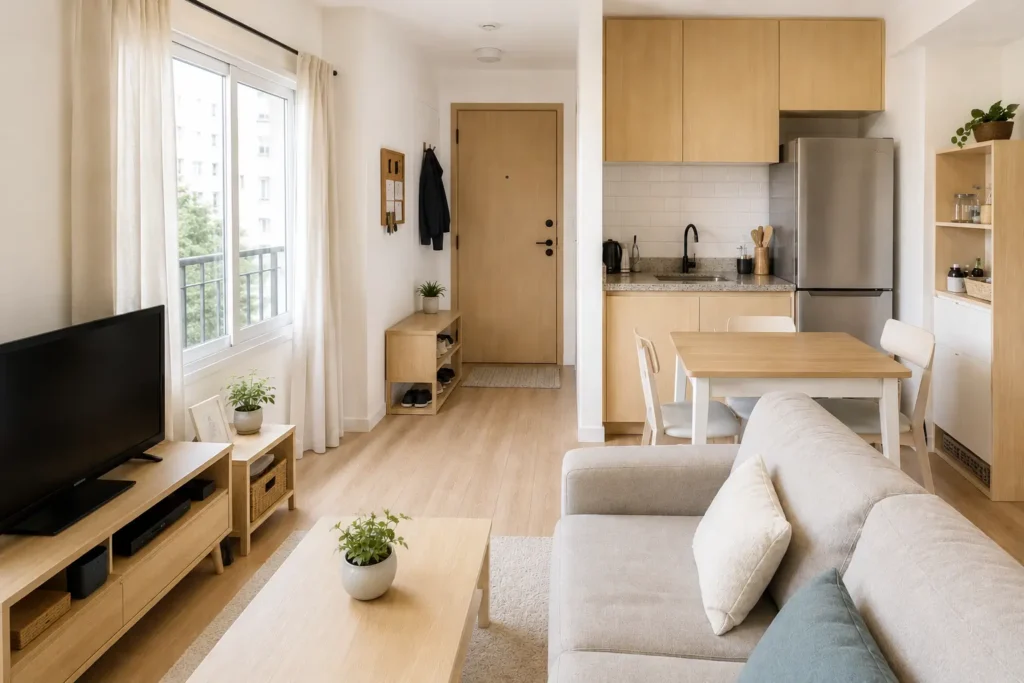
When layout is not optimized, even simple daily activities create repeated disruption across the environment.
Why Small Apartment Layout Affects Cleaning and Maintenance
In small spaces, layout defines how movement happens. When areas overlap or lack clear boundaries, activities interfere with each other.
- Cooking affects living areas
- Storage mixes with daily use
- Surfaces serve multiple purposes
This creates a system where cleaning is constantly required to reset the space.
How Poor Layout Increases Cleaning Frequency
When layout forces objects to move frequently, clutter forms faster. Items do not remain in stable positions and surfaces are continuously reused.
This is one of the main reasons why small mess turns into big clutter in small apartments, especially when movement between zones is not controlled.
The Connection Between Layout and Maintenance Systems
Layout and maintenance are directly connected. A well-structured layout supports consistent organization without requiring constant effort.
This becomes easier to understand when applying concepts from how to maintain clean small apartment without overthinking, where reducing friction is the priority. It also becomes clearer when comparing cleaning vs maintaining a small apartment, where long-term stability replaces repetitive effort.
Why Multi-Use Areas Create Instability
Small apartments often rely on multi-use areas. While necessary, these spaces create instability when not clearly defined.
- Tables used for multiple activities
- Shared storage across zones
- Surfaces without fixed purpose
Without structure, these areas require constant adjustment.
How to Improve Layout for Easier Cleaning
Improving layout does not require more space. It requires better organization of existing space.
Effective adjustments include:
- Separating zones visually or functionally
- Reducing overlap between activities
- Limiting movement of frequently used items
Even small changes can significantly reduce cleaning frequency.
Supporting Layout With Functional Storage
Storage must support the layout, not conflict with it. When storage is disconnected from daily use, items are left out.
This is why solutions like entryway storage for small spaces and over-the-door storage systems for small rooms help maintain stability in high-traffic areas.
How Layout Reduces Decision Fatigue
Good layout simplifies decisions. When items have predictable locations and movement is limited, fewer decisions are required throughout the day.
This reduces the tendency to create temporary storage, which is one of the main causes of clutter.
Connecting Layout to Daily Cleaning Routines
Cleaning routines become more effective when supported by layout. Without structural alignment, routines only delay disorder.
For example, a weekly cleaning small apartment system becomes more effective when surfaces are not overloaded by layout issues.
Integrating Layout With Maintenance Systems
Layout works best when integrated with structured systems. This creates predictable behavior within the space.
This is reinforced through tools such as a small space maintenance checklist, which defines how layout and maintenance should work together.
Long-Term Impact of Better Layout
When layout is optimized, the entire environment becomes easier to manage.
Expected outcomes include:
- Reduced clutter formation
- Lower cleaning frequency
- More stable organization patterns
Over time, the space requires less effort to maintain.
Why Layout Decisions Affect Daily Cleaning Effort
Layout decisions directly influence how often cleaning is required. When movement paths are inefficient or zones are not clearly defined, small disruptions spread more easily across the space.
Improving layout reduces unnecessary movement and helps contain daily activity, making cleaning more predictable and less frequent over time. This aligns with the principles explained in cleaning vs maintaining a small apartment, where structure reduces the need for repeated cleaning.
Conclusion
Small apartment layout affects cleaning and maintenance by shaping how the space functions daily. When layout supports movement, storage, and usage, cleaning becomes less frequent and more effective.
Improving layout is one of the most effective ways to simplify maintenance and reduce clutter over time.
Key Takeaways
- Layout defines how clutter forms and spreads
- Multi-use areas require clear boundaries
- Storage must support daily movement
- Layout reduces cleaning frequency
- Structure improves long-term maintenance