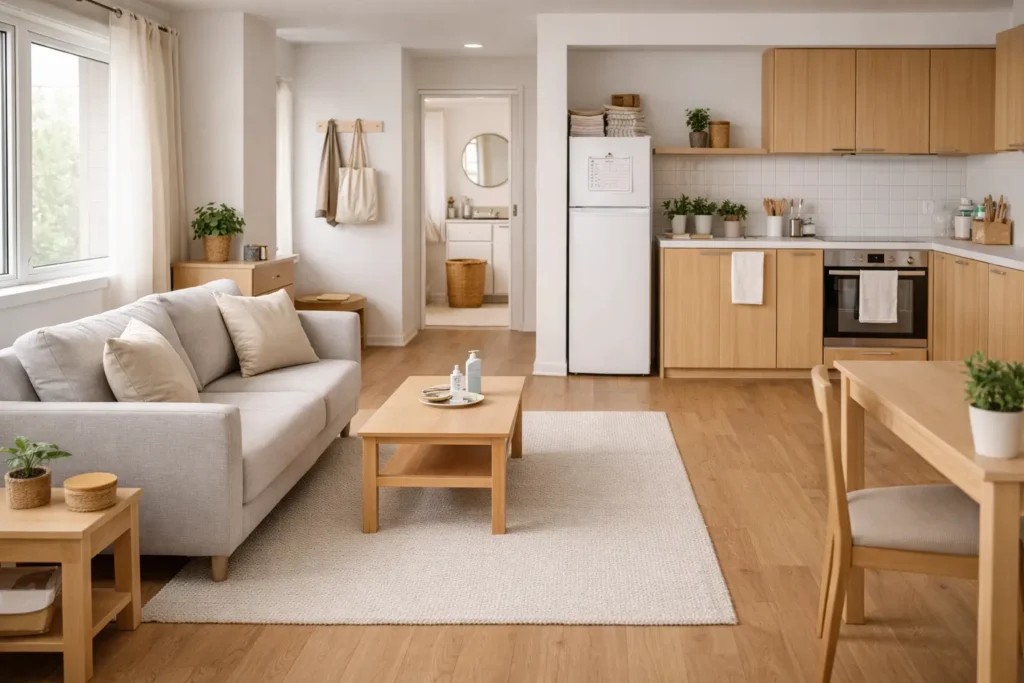
A weekly cleaning small apartment system prevents tasks from accumulating and reduces the need for long cleaning sessions. In small apartments, limited space increases usage density. As a result, dirt, clutter, and disorder build faster. This is especially noticeable in small homes where tasks are not distributed properly, which is why many people experience recurring buildup and wonder why does clutter keep coming back in small spaces.
Without a weekly system:
- Tasks stack
- Cleaning becomes irregular
- Effort increases
- Results remain temporary
A weekly structure distributes tasks across the week. This keeps effort stable and prevents overload.
Why Weekly Systems Work Better in Small Apartments
A weekly cleaning small apartment system works because it replaces reactive cleaning with scheduled maintenance.
When cleaning is unstructured:
- Tasks are delayed
- Work accumulates
- Sessions become longer
- Some areas are skipped
When tasks are distributed:
- Each session stays short
- Coverage improves
- Effort becomes predictable
- The environment stays controlled
Small apartments require frequency, not intensity.
A weekly system reduces variability. It creates a repeatable structure that stabilizes the space.
Breaking Tasks into Weekly Cleaning Blocks
Instead of cleaning the entire apartment at once, tasks should be divided into blocks.
Each block focuses on a specific area or type of task.
Core principle
Limit each session to 15–30 minutes.
Example weekly structure
Day 1 — Kitchen focus
- Clean sink
- Wipe counters
- Clean stovetop
- Empty trash
Day 2 — Bathroom
- Clean sink
- Wipe surfaces
- Clean toilet
- Replace towels
Day 3 — Living area
- Dust surfaces
- Reset furniture
- Clear clutter
- Quick floor cleaning
Day 4 — Bedroom
- Change sheets
- Clear surfaces
- Organize visible items
- Light floor cleaning
Day 5 — Floors (full pass)
- Vacuum or sweep all rooms
- Mop high-use areas
Day 6 — Flexible tasks
- Laundry
- Storage adjustments
- Missed tasks
Day 7 — Reset / light maintenance
- Quick surface check
- Prepare for next week
Breaking tasks into blocks reduces resistance and increases consistency.
Weekly Cleaning Small Apartment Routine (Step-by-Step System)
A weekly cleaning small apartment routine should follow a fixed execution pattern.
Step 1 — Define task categories
Separate tasks into:
- Surfaces
- Floors
- Fixtures
- Laundry
Step 2 — Assign tasks to specific days
Each category should have a fixed day.
Avoid random scheduling.
Step 3 — Limit session duration
Set a maximum time per session:
- 20–30 minutes
Stop when time ends.
Step 4 — Use a fixed sequence
Follow the same order:
- Clear clutter
- Clean surfaces
- Finish with floors
Consistency increases speed.
Step 5 — Keep tools accessible
Store cleaning tools in easy-to-reach locations.
Avoid setup friction.
Step 6 — Track completion
Use a simple weekly checklist.
Tracking prevents missed tasks.
Room-by-Room Weekly Cleaning System
Each room requires a defined set of actions.
Kitchen
High-frequency zone.
Tasks:
- Daily surface wipe
- Weekly deeper clean
- Trash management
Bathroom
Small area, fast impact.
Tasks:
- Surface cleaning
- Toilet cleaning
- Mirror wipe
Living area
Visible zone.
Tasks:
- Dusting
- Clutter removal
- Surface reset
Bedroom
Lower accumulation rate.
Tasks:
- Bed maintenance
- Surface clearing
- Light organization
Floors
Cross-room task.
Tasks:
- Weekly full cleaning
- Spot cleaning during the week
A room-based system ensures full coverage.
Avoiding Overload in Weekly Cleaning
Overload is the main reason systems fail.
It happens when:
- Sessions are too long
- Too many tasks are grouped
- No clear structure exists
How to prevent overload
1. Keep sessions short
- Maximum 30 minutes
2. Limit tasks per day
- 3–5 tasks per session
3. Avoid combining heavy tasks
Do not schedule:
- Kitchen deep clean + full floors on the same day
4. Accept baseline results
The goal is maintenance, not perfection.
5. Use buffer days
Include one flexible day for:
- Missed tasks
- Adjustments
A system fails when it becomes difficult to repeat.
Keeping a Weekly Cleaning System Sustainable
Sustainability depends on repetition.
Use fixed days
Assign the same tasks to the same days every week.
Reduce decision-making
Do not change the structure frequently.
Keep tools ready
Store supplies close to use areas.
Avoid expanding the system
Do not add unnecessary tasks.
Review weekly
Adjust only if tasks consistently fail.
Maintain a baseline standard
Do not aim for deep cleaning during weekly sessions.
Consistency creates stability. Stability reduces effort.
Weekly Cleaning vs Daily Reset
A weekly cleaning small apartment system works together with daily resets.
Daily reset controls visible clutter. In many cases, this is supported by a daily reset routine for small apartments that maintains surface-level order between weekly sessions.
Weekly cleaning:
- Handles accumulated dirt
- Covers deeper tasks
Both systems are complementary.
Without a daily reset:
- Weekly tasks become heavier
Without a weekly system:
- Dirt accumulates over time
Conclusion
A weekly cleaning small apartment system distributes tasks across the week, reduces overload, and maintains a stable environment. By using fixed blocks, limiting session time, and focusing on repeatable actions, the system remains sustainable and effective. Over time, this structure is often reinforced by a small space maintenance checklist that organizes tasks across different timeframes.
Key Takeaways
- Weekly systems reduce accumulation
- Tasks should be divided into blocks
- Sessions should last 15–30 minutes
- Each room must have defined tasks
- Avoid grouping heavy tasks
- Use fixed days and structure
- Combine weekly cleaning with daily resets