Hard to keep small apartment clean is rarely a problem of effort — it is a structural issue. Small spaces concentrate activity, reduce functional separation, and increase the visibility of dirt and disorder.
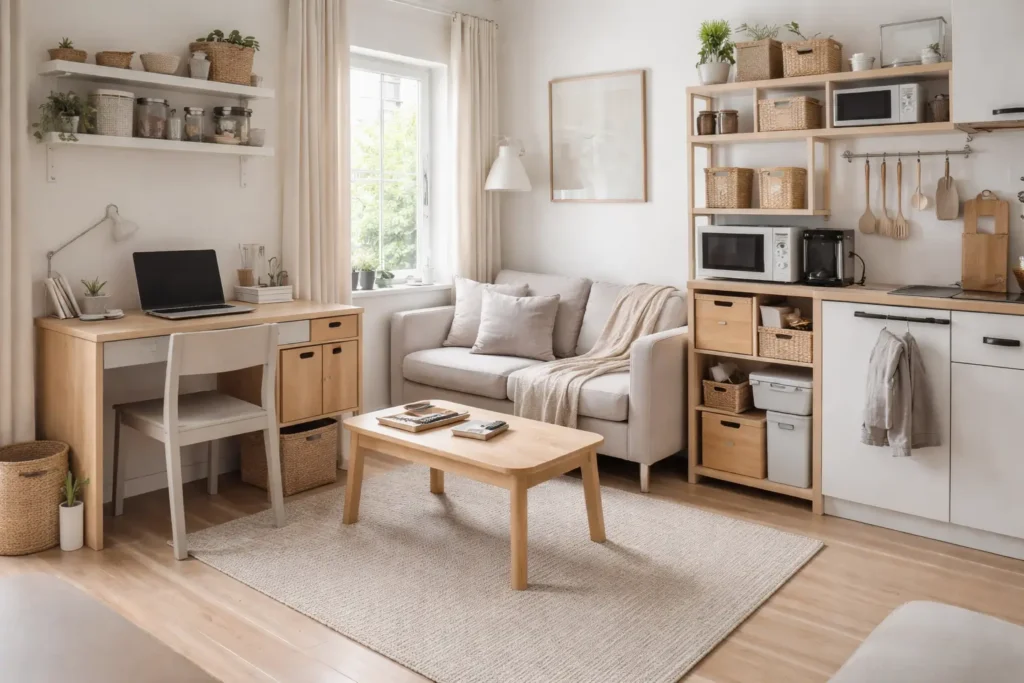
This is closely connected to how clutter behaves in small spaces. Understanding why clutter keeps coming back in small apartments helps explain why cleaning alone is often not enough.
As a result, cleaning does not last. The space resets quickly, and mess returns even after consistent effort.
Understanding why this happens is essential to fixing it.
Why It’s Hard to Keep Small Apartment Clean Consistently
Hard to keep small apartment clean becomes a recurring issue due to compression.
In small apartments:
- Activities overlap
- Surfaces serve multiple purposes
- Movement paths cross frequently
Because of this:
- Dirt accumulates faster
- Items are used and moved constantly
- Cleaning results do not last
In larger homes, dirt spreads across rooms. In small apartments, it concentrates in the same zones.
This creates the perception that cleaning is ineffective.
Why Small Apartments Get Dirty So Quickly
Small apartments get dirty faster due to density and repetition.
Key factors:
- High frequency of use
- Limited surface availability
- Constant contact with the same areas
Examples:
- Floors receive repeated traffic
- Kitchen surfaces are used multiple times per day
- Workspaces double as dining areas
Because everything is used more often, dirt builds up faster.
The issue is not dirt volume. It is usage intensity, which often becomes more problematic when storage capacity does not match daily use, as explained in why storage never feels enough in small spaces.
This becomes more visible when daily routines are not structured. A consistent small apartment cleaning routine that actually works reduces how fast dirt builds up.
The Hidden Friction in Daily Cleaning
Cleaning friction reduces consistency.
Friction is any barrier that slows down action.
Common sources of friction:
- Cleaning tools stored far from use areas
- Multi-step cleaning processes
- Lack of accessible supplies
Examples:
- Vacuum stored in a closed cabinet
- Cleaning cloths not available in key areas
- Trash bins placed inefficiently
Each additional step reduces the likelihood of action.
Over time, small delays create accumulation.
Reducing friction increases cleaning consistency.
High-Traffic Zones in Small Homes
Not all areas contribute equally to mess.
In small apartments, high-traffic zones dominate:
- Entry area
- Kitchen counter
- Dining/work surface
- Bathroom sink
These areas:
- Handle multiple functions
- Receive constant use
- Accumulate both dirt and objects
Cleaning the entire apartment is less effective than stabilizing these zones.
When these areas are controlled, overall cleanliness improves.
Why Cleaning Feels Constant in Small Spaces
Cleaning feels constant because of visibility.
In small apartments:
- Everything is exposed
- There are fewer hidden storage areas
- Small changes affect the entire space
A single object out of place impacts the visual balance.
This creates the perception of continuous disorder.
This is why many people feel their space is constantly out of control and relate to why small apartments always feel messy even after cleaning.
The issue is not the amount of mess. It is the lack of visual buffering.
Hard to Keep Small Apartment Clean Without Flow Systems
Keeping a small apartment clean becomes a recurring issue due to spatial compression.
Flow refers to how objects move through the space.
Without flow:
- Items stop where they are used
- Surfaces become temporary storage
- Cleaning becomes reactive
With flow:
- Items follow predictable paths
- Return points are clear
- Surfaces remain functional
Flow reduces the need for repeated cleaning.
It becomes more effective when supported by spatial organization. Learning how to improve flow in a small apartment helps reduce unnecessary movement and surface accumulation.
Layout Issues That Make Cleaning Harder
Layout affects cleaning efficiency.
Common layout problems:
1. Overlapping zones
Multiple functions share the same area without structure.
2. Poor storage placement
Storage is not located where items are used.
3. Obstructed movement paths
Furniture blocks efficient cleaning routes.
4. Lack of defined surfaces
Surfaces serve too many purposes.
These issues increase effort and reduce consistency.
Fixing layout reduces cleaning workload.
What Actually Makes Cleaning Easier
Cleaning becomes easier when systems support behavior.
Align cleaning tools with usage
Place tools where they are needed:
- Kitchen cloths near sink
- Bathroom wipes under sink
- Small vacuum accessible
Reduce surface roles
Each surface should have one function.
Example:
- Table = eating
- Desk = work
Stabilize high-traffic zones
Focus on controlling:
- Entry
- Kitchen
- Bathroom
Shorten cleaning cycles
This becomes significantly easier when supported by a daily reset routine in a small apartment, which prevents accumulation before it spreads.
Use short, frequent actions:
- Wipe after use
- Quick floor passes
- Immediate resets
Limit object movement
Items should not circulate freely.
Assign fixed locations for:
- Keys
- Bags
- Daily-use objects
Practical System Adjustments
Small changes improve results.
Reduce item volume
Less volume = less cleaning pressure.
Improve access
If tools are easy to reach, they are used more often.
Eliminate barriers
Avoid:
- Hard-to-access storage
- Overfilled containers
- Complex setups
Standardize routines
Consistency reduces decision-making.
Conclusion
Difficulty keeping a small apartment clean is not caused by lack of discipline.
It is caused by:
- High usage density
- Cleaning friction
- Poor layout
- Lack of flow systems
Cleaning becomes easier when the system supports daily behavior.
In practice, this type of system is often reinforced by a broader structure, such as a small space maintenance checklist that organizes daily, weekly, and monthly tasks.
Reducing friction, improving flow, and stabilizing key zones creates a space that maintains itself with minimal effort.
Key Takeaways
Systems reduce the need for effort
Small apartments concentrate dirt and activity
Cleaning feels constant due to visibility
Friction reduces cleaning consistency
High-traffic zones drive most of the mess
Flow systems reduce repeated disorder
Layout directly impacts cleaning efficiency
Short cleaning cycles work better than long sessions