In many small homes, a single room must support multiple activities. A living room may also function as a workspace, dining area, or relaxation space. Without clear structure, these overlapping uses quickly create visual confusion and inefficient layouts.
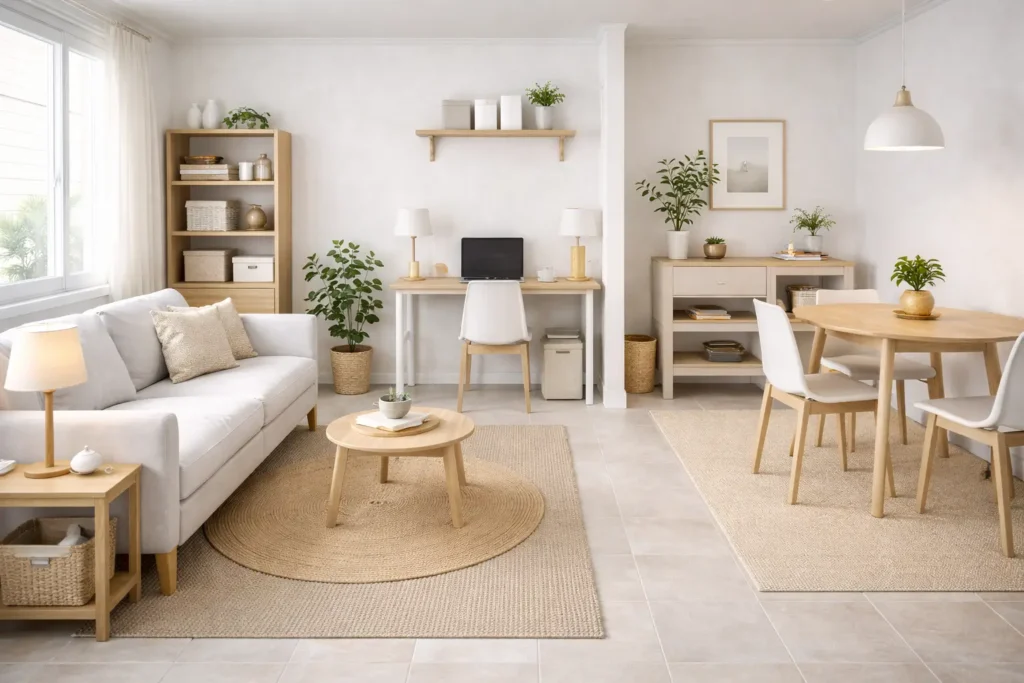
Learning how to create zones in small spaces helps separate activities while using the same room. When zones are clearly defined, objects remain grouped, surfaces stay cleaner, and the room becomes easier to use.
Instead of building walls or adding large furniture pieces, zoning relies on layout adjustments, furniture orientation, lighting differences, and subtle visual boundaries. These techniques allow one room to support several functions without increasing clutter, especially when combined with methods used for reducing visual clutter in small rooms.
The goal is not to divide the room physically. The goal is to assign clear functional roles to different areas of the space.
Why Small Spaces Need Clear Functional Zones
Small rooms usually support several daily activities.
Common combinations include:
- Living area and workspace
- Bedroom and study corner
- Kitchen and dining area
- Entry space and storage zone
When these activities overlap without structure, objects spread across the room. Surfaces fill quickly. Visual clutter increases.
Creating zones helps solve three practical problems.
Task organization
When each zone has a defined purpose, items related to that task remain nearby.
Reduced visual clutter
Grouping objects within zones prevents items from spreading across the entire room.
Predictable daily routines
Clear spatial structure helps people move through the room more efficiently.
Because of these advantages, zoning is one of the most effective strategies for organizing compact homes.
How to Create Zones in Small Spaces Without Walls
To create zones in small spaces, physical walls are not necessary. Instead, zoning relies on visual separation.
Several techniques can define zones effectively.
Furniture orientation
Furniture placement naturally separates areas.
Examples include:
- A sofa facing away from a dining table
- A desk positioned behind seating furniture
- A bookshelf placed perpendicular to a wall
Orientation signals which activity belongs to that section of the room.
Rugs as spatial markers
Rugs help define the limits of an activity zone.
Examples include:
- A rug beneath the sofa group
- A smaller rug under a desk
- A runner defining an entry area
Rugs guide the eye and clarify boundaries.
Lighting variation
Different lighting sources help separate functions.
Examples include:
- Desk lamps for work areas
- Floor lamps for reading zones
- Pendant lights above dining tables
Lighting reinforces how each zone should be used.
Surface boundaries
Tables, consoles, or shelving units help separate spaces subtly.
Examples include:
- A console behind the sofa
- A narrow shelf defining a workspace corner
These boundaries limit object spread.
Planning Zones Before Moving Furniture
Before adjusting the layout, it helps to analyze how the room is used.
Three simple questions guide the process.
What activities happen in this room?
List all tasks the room supports.
Examples include:
- Relaxing
- Working
- Eating
- Storage
- Reading
Each activity requires a defined zone, which becomes easier when applying practical approaches used for organizing small space without furniture.
Which activities happen most often?
High-frequency activities should occupy the most accessible areas.
For example, the seating zone often remains central.
Secondary activities work better near walls or corners.
Which items belong to each activity?
Objects should remain close to the zone where they are used.
Examples include:
- Work tools near the desk
- Books near seating areas
- Bags or keys near the entry zone
This prevents objects from moving randomly around the room.
Layout Techniques That Help Create Zones in Small Spaces
Once activities are identified, the layout must support them.
Several layout techniques help establish effective zones.
Use corner zones
Corners often remain unused.
They can support functions such as:
- Reading corners
- Compact desks
- Storage areas
Using corners keeps the center of the room open and helps integrate solutions commonly used in small apartment storage systems.
Maintain circulation paths
Movement paths should remain clear.
Typical paths include:
- Entry to seating area
- Entry to workspace
- Passage between furniture groups
Clear pathways improve comfort.
Balance visual weight
Large zones should not dominate the room.
Distribute zones proportionally.
Example structure:
- Living zone — largest
- Work zone — medium
- Storage zone — smallest
Balanced layouts reduce visual overload.
Tools That Help Define Zones in Small Spaces
Several simple tools help define zones without requiring structural changes.
These tools reinforce visual boundaries and maintain organization.
Narrow shelving units
Slim shelves can divide areas without blocking light or circulation.
They also provide vertical storage for books, baskets, or work supplies.
Storage baskets
Baskets help group objects related to a specific activity.
Examples include:
- Blanket baskets near seating areas
- Work supply baskets near desks
Grouped objects create visual order.
Room dividers or open shelving
Open shelving units act as light dividers.
They separate areas without closing the room visually.
Wall hooks and rails
Hooks or rails help organize items belonging to a specific zone.
Examples include:
- Bags near the entry zone
- Headphones near workspaces
These small tools help maintain clear functional areas.
Common Mistakes When Dividing Small Rooms
Zoning attempts sometimes fail because they introduce new problems.
Several mistakes appear frequently.
Creating too many zones
Small rooms should support only essential activities.
Too many zones increase visual complexity.
Using oversized furniture
Large furniture pieces reduce usable space and block circulation.
Compact pieces work better.
Ignoring vertical storage
Walls provide storage capacity without occupying floor area.
Ignoring vertical space limits flexibility.
Mixing objects between zones
When items move constantly between zones, the layout loses structure.
Maintaining object discipline keeps the system working.
Conclusion
Small homes require clear spatial structure to remain organized. When multiple activities occur within one room, objects spread quickly and visual clutter increases.
Learning how to create zones in small spaces allows one room to support several functions without adding walls or increasing furniture.
Using layout adjustments, furniture orientation, lighting variation, and simple visual boundaries, rooms become easier to navigate and maintain.
A well-zoned room supports daily routines, reduces clutter, and improves overall functionality.
Key Takeaways
- Zoning separates activities within one room
- Furniture orientation helps define functional areas
- Rugs and lighting clarify activity zones
- Clear circulation paths improve usability
- Corners can support compact functional areas
- Limiting zones reduces visual clutter
- Consistent object placement maintains the layout