Organizing small space without furniture is a common challenge in compact homes. Many small apartments and studios lack enough floor area to add cabinets, shelves, or additional storage units. As a result, people often attempt to solve clutter by purchasing more furniture, which frequently creates the opposite effect. This pattern is closely related to why clutter keeps coming back in small apartments, where systems fail to support daily use.
When new furniture is added to an already limited layout, circulation space decreases and rooms become visually crowded. The problem is not always the amount of storage. The problem is how existing space is used.
Effective organization in small spaces often depends on improving spatial structure rather than adding more objects. Walls, vertical surfaces, and hidden areas usually provide enough capacity when used correctly. By focusing on layout adjustments and efficient use of existing surfaces, it becomes possible to organize a small space without introducing additional furniture, especially when applying small apartment storage systems that optimize vertical and unused areas.
Why Adding Furniture Often Makes Small Spaces Harder to Organize
Small homes typically have limited circulation areas. When additional furniture is introduced, three common problems appear.
Restricted circulation paths
Movement paths become restricted. Narrow passages between objects reduce accessibility and make daily activities less efficient.
Increased visual density
Multiple storage units positioned close together create the impression of clutter even when items are technically organized.
More storage zones to manage
Furniture introduces new storage zones that require management. Instead of simplifying organization, the number of locations where items can accumulate increases.
Because of these structural effects, organizing small spaces by adding furniture rarely improves functionality. In many cases, removing or avoiding extra furniture creates a more efficient environment.
Organizing Small Space Without Furniture Using Structural Surfaces
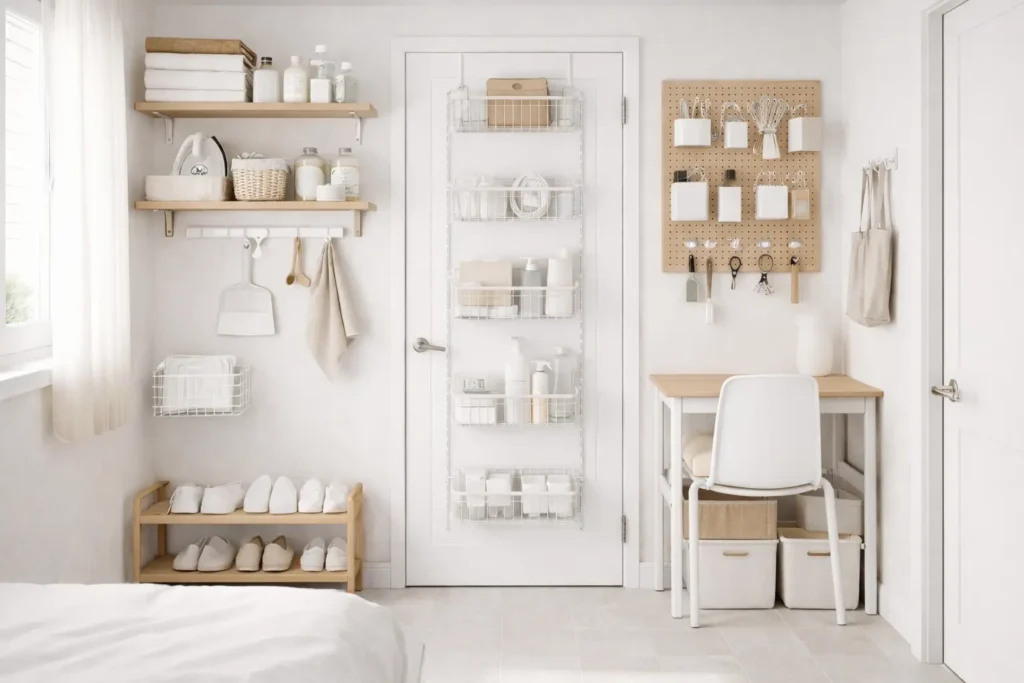
A key principle of organizing small space without furniture is using existing architectural surfaces instead of additional objects. Walls, doors, and vertical structures often remain unused.
Several structural surfaces can support storage without occupying floor area.
Walls
Walls provide vertical space for shelving, rails, or modular hanging systems. These solutions allow storage without altering circulation space.
Doors
Doors can hold lightweight hanging organizers or hooks. This method works particularly well for cleaning tools, bags, or small accessories.
Cabinet interiors
Cabinet interiors often contain unused vertical space that can be improved with internal organizers or stacking containers.
Narrow wall sections
Even narrow wall sections between appliances or doors can support slim hanging systems that hold small everyday items.
Using architectural surfaces transforms unused areas into functional storage zones.
Vertical Organization Methods That Replace Furniture
Vertical systems allow small spaces to expand storage capacity without increasing physical footprint. Instead of adding cabinets or tables, vertical organization redistributes objects upward.
Several methods are effective in compact environments.
Wall-mounted shelves
Wall-mounted shelves create storage above eye level without blocking floor space. They are suitable for items used regularly but not constantly.
Hanging rail systems
Hanging rail systems allow tools, containers, or accessories to remain accessible without requiring drawers or cabinets.
Over-door organizers
Over-door organizers convert unused door surfaces into storage areas for lightweight items.
Stackable wall containers
Stackable wall containers help separate categories of objects while maintaining a compact arrangement.
Pegboard systems
Pegboard systems allow adjustable storage layouts. Hooks, baskets, and containers can be repositioned depending on changing needs.
These systems allow storage capacity to increase while the physical layout of the room remains unchanged.
Improving Layout to Support Organization Without Furniture
Another important strategy in organizing small space without furniture is adjusting layout instead of adding objects.
Layout improvements often solve clutter problems more effectively than new storage units, particularly in homes that need practical solutions for how to organize a small apartment with no storage.
Identify structural elements
Begin by identifying the largest items already present in the room. Beds, sofas, appliances, and desks define the structural boundaries of the space.
Analyze circulation paths
Observe circulation paths. Paths between furniture should remain clear and direct.
Reposition obstructing items
If objects block movement or overlap activity zones, repositioning them can free significant usable space.
Maintain visible floor space
Open floor areas help maintain visual clarity. When floor surfaces remain partially visible, rooms appear larger and easier to maintain.
Rearranging existing furniture often reveals storage opportunities that were previously hidden or inaccessible.
Hidden Storage Areas Already Present in Most Small Spaces
Many compact homes contain hidden storage areas that remain unused. Identifying these areas reduces the need for additional furniture.
Under-bed space
Under-bed space is one of the most common examples. Shallow containers or low-profile storage boxes can hold seasonal clothing or infrequently used items.
Space above doors
Space above doors is another overlooked location. Narrow shelves installed above door frames can store lightweight objects without affecting daily movement.
Unused corners
Corners often remain empty because standard furniture does not fit efficiently. Corner wall shelves can transform these zones into practical storage areas.
Upper kitchen storage
Kitchen cabinet tops and upper shelves can store items used occasionally.
Closet vertical space
Closets also contain vertical capacity that is frequently underused. Hanging organizers and shelf dividers improve internal structure without expanding furniture.
Recognizing these hidden zones helps maximize available capacity and makes it easier to store things in a small apartment without adding extra furniture.
Common Mistakes When Trying to Organize Without Furniture
Although avoiding additional furniture can improve organization, several mistakes often appear during the process.
Overcrowding wall systems
Installing too many shelves or hanging units creates visual density and reduces accessibility.
Mixing unrelated item categories
Storing too many categories of items in the same location creates confusion.
Using vertical systems for heavy objects
Some people attempt to store heavy objects on vertical systems designed for lightweight items. This leads to unstable or inefficient arrangements.
Ignoring layout balance
Ignoring layout balance can create uneven distribution of objects across the room.
Successful organization requires moderation. Storage should remain accessible and proportionate to the room’s size.
Conclusion
Organizing small space without furniture is primarily a structural process rather than a purchasing decision. Instead of increasing the number of objects in a room, the focus should shift toward improving how existing space functions.
Walls, vertical systems, and hidden storage zones provide significant capacity when used strategically. In many compact homes, these elements offer more practical storage solutions than additional furniture.
When layout, circulation paths, and vertical surfaces are optimized, small spaces become easier to maintain and more efficient to use.
Key Takeaways
- Adding furniture often reduces usable space in compact homes
- Walls and vertical surfaces provide effective storage capacity
- Layout adjustments can improve organization without new objects
- Door surfaces and wall sections can support lightweight storage
- Hidden areas such as under-bed space increase storage potential
- Vertical systems allow storage expansion without occupying floor space
- Clear circulation paths help maintain functional small spaces