A small laundry room setup requires careful organization because the space usually contains multiple functional elements. Washing machines, dryers, cleaning products, baskets, and folding surfaces must fit within a limited area. Without a structured setup, the space becomes inefficient and difficult to maintain.
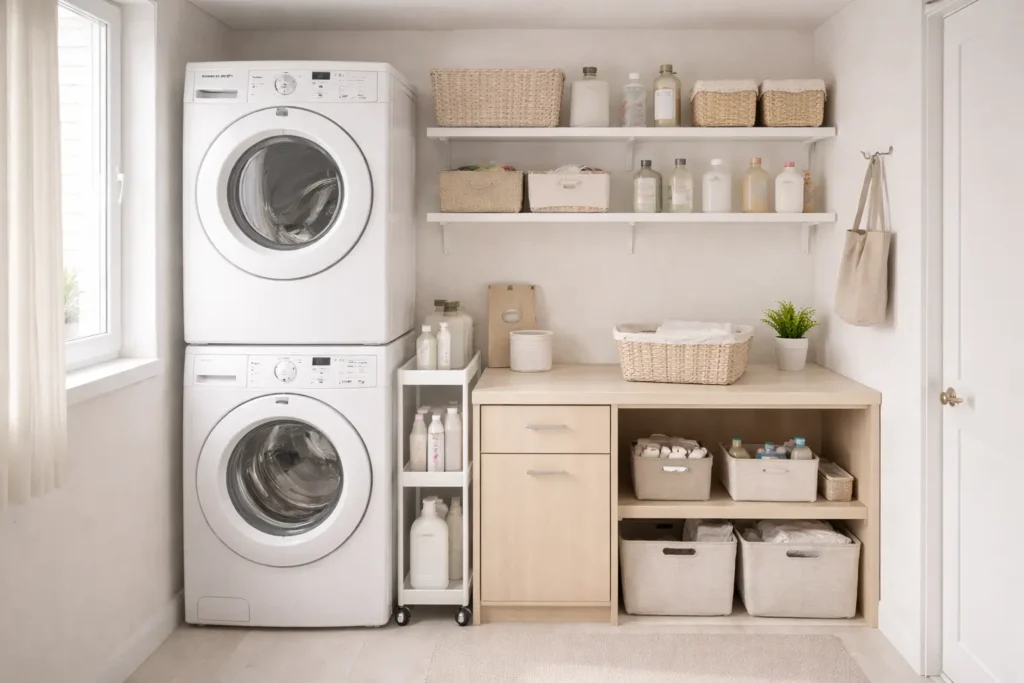
Small laundry rooms often suffer from three structural problems: lack of storage, poor equipment placement, and unused vertical space. This is closely related to why it is so hard to keep a small apartment clean, where layout inefficiencies increase friction and reduce system performance. These factors reduce efficiency and create daily friction when using the room. Similar structural problems appear in many compact homes when people try to organize a small apartment with no storage without defining clear storage zones.
A practical setup solves these issues by defining clear zones, using vertical storage, and organizing frequently used items in predictable locations. The goal is not decoration. The goal is operational efficiency in a compact area.
Understanding the Structure of a Small Laundry Room Setup
A small laundry room setup works best when the room is divided into functional zones. Each zone handles a specific task related to laundry activities.
Most compact laundry spaces contain four operational zones.
Equipment zone
- washing machine
- dryer
- stacked or side-by-side units
Supply zone
- detergent
- cleaning products
- stain removers
- dryer sheets
Laundry handling zone
- baskets
- hampers
- sorting containers
Folding or staging zone
- small countertop
- wall mounted folding table
- top of the washer or dryer
When these zones are clearly defined, movement inside the room becomes easier and repetitive tasks require fewer steps.
Planning the Layout for a Small Laundry Room
Layout planning determines how efficiently the space functions. In small rooms, poor layout quickly creates bottlenecks.
Start by identifying the position of the largest elements:
- Washer
- Dryer
- Door clearance
- Utility connections
After equipment placement, remaining space should support storage and workflow.
Common layout formats include:
Stacked layout
- washer and dryer stacked vertically
- frees horizontal floor space
- suitable for narrow laundry closets
Side-by-side layout
- machines positioned horizontally
- allows countertop installation above units
Closet laundry layout
- compact configuration inside a cabinet or closet
- sliding or folding doors
Each layout should maintain at least a small accessible area for loading and unloading machines.
Storage Systems That Improve Small Laundry Room Setup
Storage is the main factor that determines whether a small laundry room functions well or becomes cluttered.
Effective storage systems include:
Wall shelving
- open shelves above machines
- simple access to detergents and supplies
- prevents products from occupying floor space
Closed cabinets
- protects items from dust
- hides visual clutter
- useful for bulk products
Slim vertical storage
- narrow shelving units
- rolling carts between appliances
Wall hooks and rails
- hanging cleaning tools
- storing reusable laundry bags
Stackable containers
- organize small items
- prevent product overflow
Vertical storage is particularly important because small laundry rooms rarely have excess floor area. Many of these strategies are also part of broader systems explained in small apartment storage systems that actually work, where vertical and wall storage play a central role in compact homes.
Using Vertical Space in a Small Laundry Room Setup
Vertical space is often the most underused area in compact laundry rooms.
Several solutions increase storage without increasing floor footprint.
Upper wall shelving
Install shelves above machines or above door frames.
Over-appliance cabinets
Cabinets placed directly above washer and dryer units.
Wall mounted drying racks
Foldable racks create temporary drying space without occupying permanent floor area.
Tall narrow cabinets
These units fit into unused corners and maximize vertical storage capacity.
Pegboard systems
A pegboard wall allows flexible organization for cleaning tools and accessories.
Using vertical systems transforms small laundry rooms from cluttered utility spaces into efficient work areas.
Improving Workflow Inside a Small Laundry Room
Laundry rooms function best when movement follows a logical sequence.
Typical workflow:
- Clothes enter the room
- Sorting
- Washing
- Drying
- Folding
- Storage or transport
A good setup supports this flow.
Sorting containers near entrance
Place baskets or bins where laundry first arrives.
Supplies near machines
Detergent and cleaning products should be within arm’s reach of the washer.
Folding surface near dryer
Clean laundry can be folded immediately after drying.
Laundry basket storage
Empty baskets should have a dedicated location.
Without workflow planning, users repeatedly move back and forth across the room, which slows down daily routines.
Common Problems in Small Laundry Room Organization
Many small laundry rooms fail because basic structural principles are ignored.
Common problems include:
Random product storage
Detergents placed in multiple locations create clutter.
Floor storage overflow
Supplies stored on the floor reduce movement space.
Unused vertical areas
Empty walls waste valuable storage potential.
Overloaded shelving
Too many items stored together reduce accessibility.
Lack of sorting system
Without baskets or containers, laundry accumulates quickly.
Correcting these issues often requires small adjustments rather than a full renovation.
Conclusion
A small laundry room setup works best when the space is treated as a functional system rather than a storage corner. Efficient layouts, vertical storage, and clearly defined zones transform compact laundry rooms into practical working areas.
Even very small spaces can support efficient laundry routines when equipment placement, storage systems, and workflow are organized deliberately. These same principles also apply when learning how to store things in a small apartment without creating clutter in other areas of the home.
Key Takeaways
- Divide the room into clear functional zones
- Position washer and dryer first when planning layout
- Use vertical shelving to maximize storage capacity
- Keep supplies close to the washing machine
- Install foldable surfaces for folding tasks
- Store baskets and sorting containers in predictable locations
- Avoid floor clutter by prioritizing wall storage