Store cleaning supplies in small apartment systems by organizing products according to frequency of use and available storage space. In many small apartments, cleaning supplies accumulate in multiple locations. Bottles remain under the sink, tools are placed in closets, and extra products end up stored on shelves or inside cabinets that were not originally designed for cleaning storage.
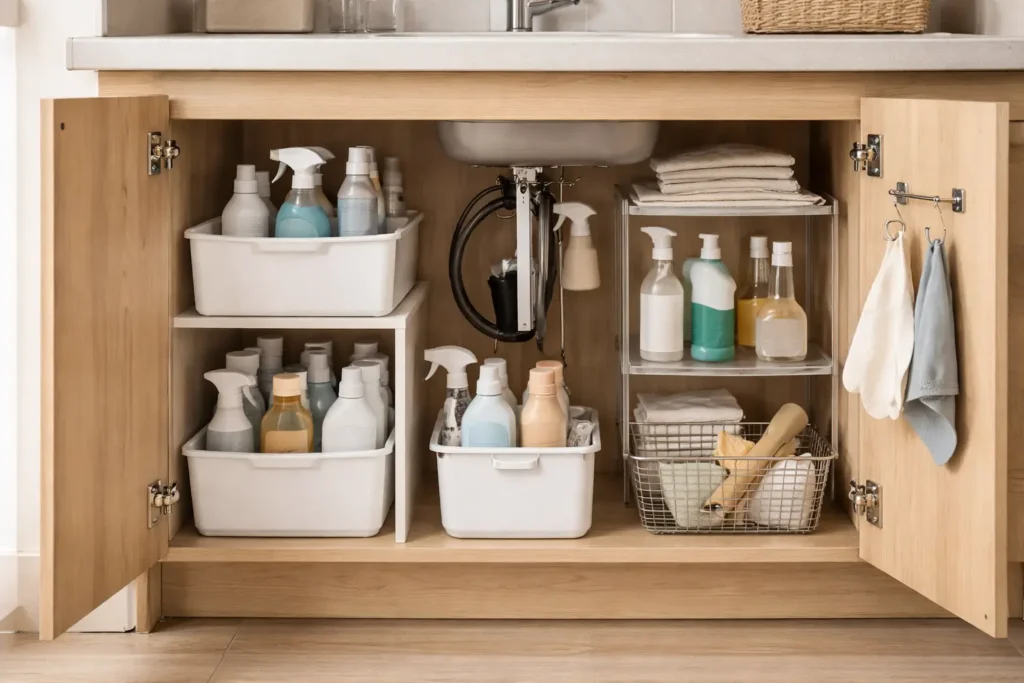
Understanding how to store cleaning supplies in a small apartment requires organizing products according to frequency of use and available storage space. Many of the same principles used for cleaning products also apply when learning how to store things in a small apartment without creating clutter. When cleaning tools, sprays, and detergents are stored without structure, cabinets become crowded and it becomes difficult to locate items quickly.
Learning how to store cleaning supplies in small apartment spaces helps reduce cabinet clutter and keeps everyday cleaning products easier to access.
A practical storage system distributes cleaning supplies across defined zones and uses containers, vertical storage, and compartment organization to maintain order.
How to Store Cleaning Supplies in a Small Apartment Efficiently
Cleaning products vary widely in size and shape. Spray bottles, detergents, brushes, cloths, and refill containers require different types of storage.
In small apartments, several conditions make organization more difficult:
• limited cabinet space
• narrow under-sink areas
• irregular bottle sizes
• shared storage with other household items
• accumulation of duplicate products
Without a structured system, cleaning supplies often migrate between storage areas. A spray bottle might remain under the kitchen sink while cloths are placed in a hallway cabinet and additional products remain stored in utility closets.
Over time, this fragmentation creates inefficient storage and makes routine cleaning slower because supplies are not located in a single accessible system.
How to Store Cleaning Supplies in a Small Apartment Using Under-Sink Storage
The area under sinks is one of the most common storage locations for cleaning products. However, pipes and limited vertical clearance often reduce usable space.
Efficient under-sink storage requires dividing the area into smaller compartments.
Useful tools include:
- adjustable shelf organizers
- stackable plastic bins
- pull-out storage drawers
- vertical bottle racks
These accessories allow cleaning products to be grouped by type instead of being stacked randomly.
For example:
• daily cleaning sprays can be stored in front sections
• refill containers can remain in deeper areas
• cloths and sponges can be placed in small containers
This structure improves accessibility and prevents products from shifting each time the cabinet is opened.
Vertical Storage Systems for Cleaning Supplies in Small Apartments
Vertical storage increases the capacity of small apartments by using wall space instead of floor area.
When cleaning supplies are stored vertically, more products can fit into compact areas while remaining visible and accessible.
Practical vertical storage solutions include:
• wall-mounted racks inside closets
• adhesive storage hooks
• hanging cleaning caddies
• door-mounted storage organizers
For example, broom handles and mops can be attached to wall clips instead of being placed loosely inside closets.
Spray bottles can be stored inside hanging caddies that attach to closet doors. This approach frees cabinet space and prevents tools from falling or shifting during storage.
Vertical organization also improves visibility because supplies remain positioned at eye level rather than buried inside cabinets.
Storage Containers That Work for Cleaning Supplies
Containers help group similar items and prevent products from spreading across cabinets.
However, containers must match the size of cleaning products. Large containers often waste space and reduce accessibility.
Efficient container options include:
Narrow plastic bins
These bins fit easily inside cabinets and allow bottles to remain upright.
Cleaning caddies
Portable caddies allow frequently used products to be moved between rooms during cleaning tasks.
Drawer organizers
These are useful for storing cloths, brushes, gloves, and sponges.
Stackable bins
Stackable containers maximize vertical space inside closets or cabinets.
The objective of container storage is to create categories such as:
• daily cleaning products
• specialty cleaning supplies
• cloths and tools
• refill bottles
Grouping products this way simplifies access and reduces clutter.
Creating Cleaning Zones Inside a Small Apartment
Cleaning supplies are easier to manage when they are distributed according to usage zones.
Instead of storing all products in one cabinet, it is often more efficient to assign supplies to different areas.
A practical zoning system might include:
Kitchen cleaning zone
Products used daily such as:
• dish soap
• kitchen surface sprays
• sponges
These supplies usually remain under the kitchen sink.
Bathroom cleaning zone
Products such as:
• toilet cleaner
• glass cleaner
• bathroom disinfectants
These can be stored under the bathroom sink or inside a small cabinet.
General cleaning zone
Products used occasionally, including:
• floor cleaners
• refill containers
• specialty detergents
These can remain stored in a closet or cabinet dedicated to household supplies.
Zoning reduces the need to move products between rooms and makes cleaning routines faster. Similar storage zoning strategies are also used when organizing footwear, especially when learning how to store shoes in a small apartment efficiently.
Maintaining an Organized Cleaning Supply System
Even well-organized systems can become inefficient when products accumulate over time.
Maintenance requires simple routines that prevent storage areas from becoming overcrowded.
Useful practices include:
• removing empty containers immediately
• limiting duplicate products
• grouping similar items together
• storing refill containers separately
• reviewing storage areas periodically
Cleaning products tend to accumulate because replacements are often purchased before existing bottles are empty. Regular review prevents cabinets from filling with partially used containers. Seasonal items such as bedding and blankets often require separate storage systems, similar to the methods used to store blankets in a small apartment efficiently.
When cleaning supplies are returned to the same storage location after each use, the system remains functional and easy to maintain.
Conclusion
Storing cleaning supplies in small apartments becomes difficult when products are placed randomly across cabinets, closets, and shelves. In apartments with limited built-in storage, these systems become even more important when learning how to organize a small apartment with no storage.
A practical storage system focuses on three elements:
• structured under-sink storage
• vertical organization
• container-based grouping
These strategies allow cleaning supplies to remain accessible while reducing clutter inside cabinets and closets.
By organizing products into clear zones and using compact storage tools, even small apartments can maintain an efficient cleaning supply system without expanding storage space.
Key Takeaways
- Cleaning supplies vary in size and require structured storage systems.
- Under-sink organizers help divide limited cabinet space efficiently.
- Vertical storage increases capacity without using floor space.
- Containers group cleaning products and reduce clutter.
- Zoning cleaning supplies by room simplifies cleaning routines.
- Regular maintenance prevents accumulation of unused products.