Store shoes in small apartment spaces can be challenging because compact homes rarely include dedicated shoe storage areas. Without proper systems, shoes accumulate near entrances, under furniture, or along walls, creating visual clutter and reducing usable floor space.
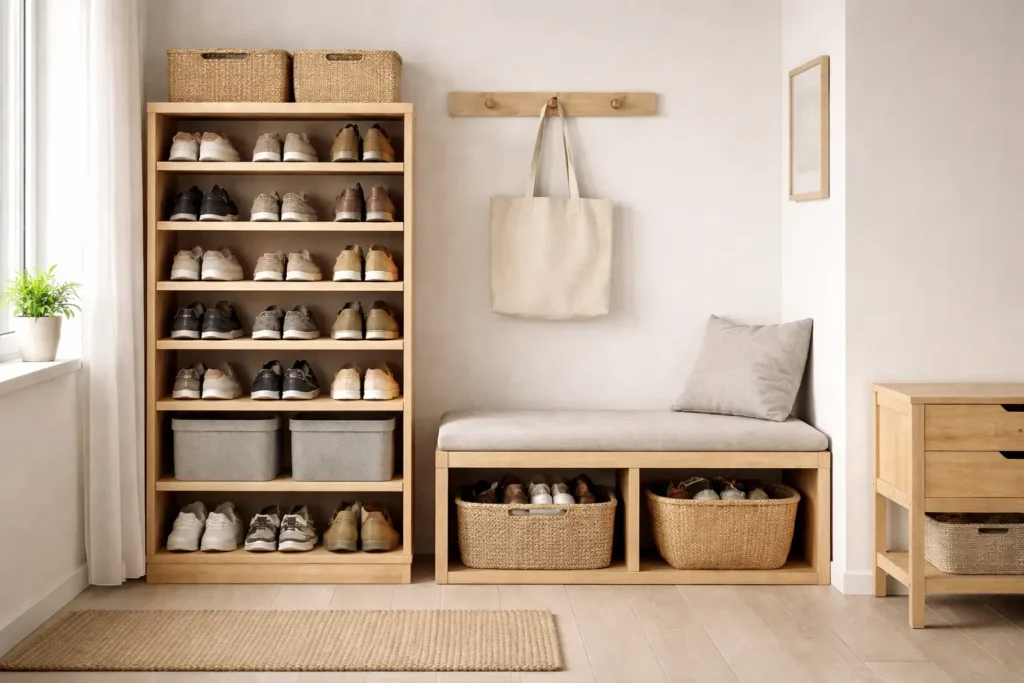
In small apartments, shoes are used frequently and often stored temporarily in visible areas. When several pairs share the same surfaces, entryways become crowded and rooms feel disorganized.
A practical storage system prevents this accumulation by assigning clear storage zones and using vertical or hidden spaces efficiently. The goal is not to increase storage capacity but to organize existing space more effectively.
The following strategies explain how to store shoes in small apartments using structured storage methods that maintain order while minimizing clutter.
Why Shoes Create Clutter in Small Apartments
Common ways to store shoes in a small apartment include:
- vertical wall racks
- entryway benches with shelves
- under-bed storage containers
- over-the-door organizers
Shoes are among the most frequently used items in a household. Unlike seasonal clothing or rarely used equipment, footwear circulates daily between indoor and outdoor spaces.
In small apartments, this constant movement causes shoes to accumulate quickly near entryways or along room edges. Because storage space is limited, shoes are often placed temporarily on floors or under furniture. Over time, these temporary locations become permanent storage zones.
Another factor is category variety. Apartments often contain multiple types of footwear such as:
- everyday shoes
- sports shoes
- seasonal footwear
- formal shoes
Without defined storage systems, these categories mix together. The result is visual clutter and inefficient use of available space.
A structured storage system separates these categories while maintaining easy daily access.
How to Store Shoes in a Small Apartment Using Vertical Storage
One of the most effective ways to store shoes in a small apartment is to use vertical storage systems. Walls and vertical surfaces provide unused capacity that can replace traditional floor storage.
Vertical storage significantly increases the capacity of small apartments because it uses wall space instead of floor space. Installing vertical storage systems for small rooms allows multiple pairs of shoes to be organized efficiently without occupying valuable walking areas.
Vertical storage works well because shoes are relatively small objects that can be stacked or arranged efficiently. By using vertical systems, several pairs can occupy a single narrow footprint.
Common vertical solutions include:
- wall-mounted shoe racks
- tall narrow shelving units
- vertical cabinet organizers
- over-the-door shoe organizers
These systems move shoes away from the floor and create dedicated storage zones that remain visually contained.
Vertical storage also works particularly well in entryways, closets, and hallway corners where floor space is limited but wall space remains available.
Entryway Storage Systems for Everyday Shoes
The entryway is the primary location where shoes accumulate. Without a defined system, shoes quickly spread across the entrance area.
A practical solution is to assign the entryway as the primary storage zone for frequently used shoes. This keeps daily footwear accessible while preventing it from spreading into other rooms.
Effective entryway storage systems include:
- compact shoe benches with built-in shelves
- narrow open shelving units
- wall-mounted shoe racks
- entryway cabinets with multiple compartments
These systems allow shoes to remain organized without occupying large amounts of floor space.
Separating frequently used shoes from occasional footwear is important. Everyday shoes should remain near the entrance, while seasonal or rarely used pairs can be stored in secondary areas.
Hidden Storage Areas for Shoe Organization
Hidden storage is particularly useful when apartments lack closets or dedicated storage rooms. Several overlooked areas can function as shoe storage zones without affecting the layout of the room.
Common hidden storage areas include:
- under-bed storage containers
- storage benches with internal compartments
- lower cabinets in shelving units
- storage ottomans
Under-bed containers are especially efficient because they use otherwise unused space. Seasonal shoes or special-occasion footwear can be stored there without affecting daily routines.
Closed containers also reduce visual clutter because shoes remain out of sight while still being accessible when needed.
Hidden storage systems work best when shoes are grouped by category to avoid unnecessary searching.
Container Systems That Keep Shoes Organized
Containers are useful when storing shoes on open shelving. Without containers, shelves quickly become visually cluttered and difficult to maintain.
Using containers provides structure by separating shoes into defined groups. This approach prevents items from spreading across multiple storage zones.
Effective container options include:
- fabric storage boxes
- stackable plastic containers
- labeled baskets
- transparent shoe boxes
Transparent containers allow quick identification of stored shoes. Labeled boxes help maintain organization when several categories are stored together.
This type of container-based storage works best when shoes are grouped by category and stored in clearly defined zones. Understanding how to store things in a small apartment without creating clutter helps maintain a structured storage system where shoes remain easy to access without spreading across the apartment.
This approach also works well in closets or shelving systems where shoes must share space with other items.
Container systems help maintain the broader organization structure explained in how to store things in a small apartment without creating clutter, where objects are grouped by usage and stored in dedicated zones.
Rotating Seasonal Shoes to Reduce Storage Pressure
One common mistake in small apartments is storing all footwear in the same location year-round. Seasonal rotation significantly reduces storage pressure.
During warmer months, winter footwear can be moved to secondary storage areas. Likewise, heavy boots or insulated shoes can be stored away during summer.
Seasonal rotation creates additional space in primary storage zones and improves daily accessibility.
Typical seasonal rotation categories include:
- winter boots
- summer sandals
- sports footwear
- formal shoes
Only the most frequently used shoes should remain in the primary storage zone near the entryway.
This approach prevents overcrowding and keeps the storage system simple to maintain.
Maintaining a Shoe Storage System Over Time
Even well-designed storage systems require simple maintenance rules. Without consistent habits, shoes gradually return to floors and visible surfaces.
A few operational practices help maintain order:
- return shoes to their storage zone immediately after use
- avoid storing shoes in multiple rooms
- limit the number of shoes kept near the entrance
- rotate seasonal footwear regularly
Consistency is more important than complexity. A simple system that is used daily performs better than a complex structure that is difficult to maintain.
Small adjustments in daily organization can prevent shoes from spreading across the apartment. Simple storage hacks for small spaces often help maintain efficient systems that keep entryways and storage zones organized over time.
When shoes remain contained within defined zones, apartments feel more organized and functional.
Conclusion
Learning how to store shoes in a small apartment requires structured storage systems rather than additional furniture. Vertical racks, hidden storage areas, and container systems allow shoes to remain organized while minimizing clutter.
By assigning specific storage zones and rotating seasonal footwear, apartments can maintain efficient storage even when space is limited.
Key Takeaways
- Shoes accumulate quickly in small apartments because storage space is limited.
- Vertical storage systems replace traditional floor storage.
- Entryway storage zones keep frequently used shoes accessible.
- Hidden storage areas increase capacity without affecting room layout.
- Containers maintain order in open shelving systems.
- Seasonal rotation reduces pressure on primary storage zones.
- Simple maintenance habits keep the storage system functional.