Learning how to store things in a small apartment can be challenging because compact homes have limited storage capacity. Storing items efficiently requires a structured approach, since small apartments concentrate everyday objects in restricted areas. When apartments lack built-in storage, learning how to organize a small apartment with no storage becomes essential for maintaining an organized living environment. Many units have fewer closets, limited cabinetry, and minimal built-in storage. As a result, daily items quickly accumulate across visible surfaces and shared storage zones.
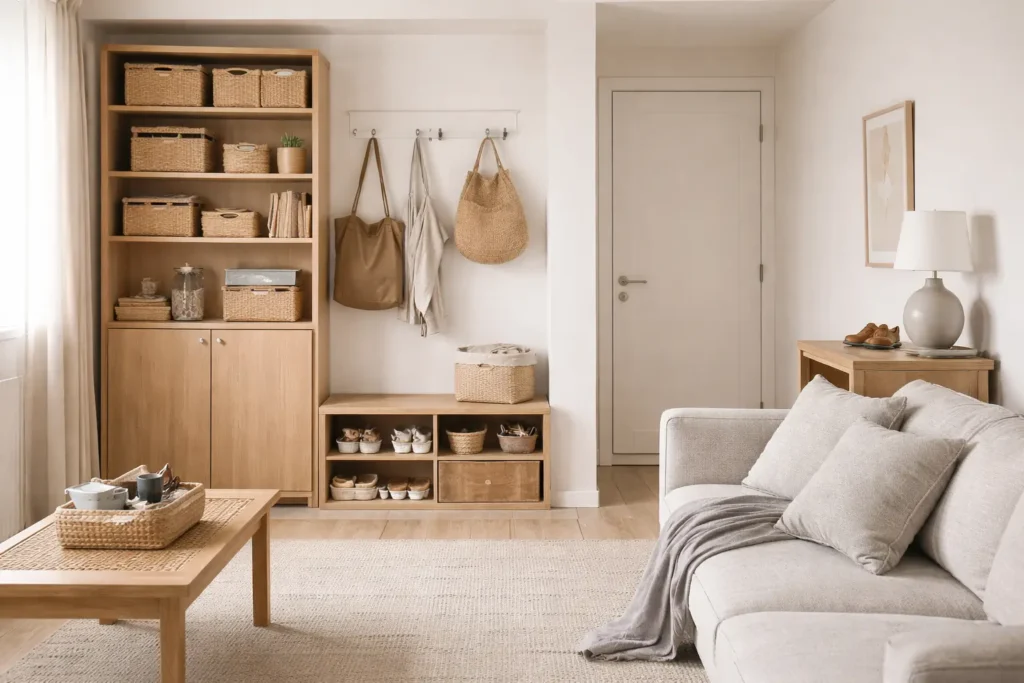
Without a clear storage system, items compete for the same shelves, drawers, and cabinets. This creates clutter and makes organization difficult to maintain over time.
Efficient storage depends on distributing items across multiple zones while preventing unnecessary accumulation in a single area. The goal is not to add more storage furniture but to use existing space more efficiently.
The methods below explain how to store items in small apartments without creating clutter by applying structured storage systems.
How to Store Things in a Small Apartment Without Creating Clutter
Learning how to store things in small apartment spaces requires more than simply adding containers or baskets. Small homes demand structured storage systems that distribute items efficiently while preventing visual clutter. The goal is not to increase storage but to organize existing space in a more functional way.
Certain categories of items require dedicated storage solutions. For example, organizing footwear properly helps prevent clutter near entryways. Practical methods for how to store shoes in a small apartment allow shoes to remain accessible while maintaining an organized storage system.
Why Small Apartments Accumulate Clutter Quickly
Small apartments accumulate clutter faster than larger homes because storage capacity is limited while daily item volume remains similar. Kitchen tools, clothing, cleaning supplies, electronics, and personal accessories must all share restricted storage zones.
When multiple item categories occupy the same space, organization systems break down. Drawers become overcrowded, shelves lose structure, and cabinets stop functioning as storage systems.
Another contributing factor is horizontal storage. When objects spread across floors, tables, and countertops, usable space decreases rapidly.
Effective organization requires redistributing storage vertically and separating item categories into dedicated storage areas.
How to Store Things in a Small Apartment Using Category Storage
The most reliable method to store things in small apartment environments is category-based storage. This approach groups similar items together and assigns each category a dedicated location.
Examples of category storage include:
- Kitchen tools stored in designated drawers or containers
- Cleaning supplies grouped in one cabinet or storage bin, similar to structured systems used to how to store cleaning supplies in a small apartment (simple storage systems) efficiently.
- Seasonal clothing placed in labeled storage boxes
- Office supplies stored inside drawer organizers
- Personal accessories grouped inside small containers
Category storage reduces item scattering. When each group of items has a defined storage area, objects are easier to locate and return after use.
This structure also prevents multiple storage zones from accumulating the same type of item.
Practical Storage Zones to Store Items in Small Apartments
Creating multiple storage zones is essential when learning how to store items in small apartments efficiently. Instead of concentrating storage in a few areas, items should be distributed across the home.
Common storage zones include:
- Under-bed storage containers
- Closet shelves and hanging organizers
- Door-mounted storage racks
- Vertical shelving units
- High cabinets above eye level
These zones help distribute objects throughout the apartment rather than concentrating them in one location.
For example, seasonal items can remain in elevated storage areas while daily-use objects stay within easy reach.
Use Containers to Store Things in a Small Apartment Efficiently
Containers improve storage efficiency because they control how items occupy available space. Without containers, objects spread loosely across shelves and drawers.
Effective container systems include:
- Stackable storage boxes
- Clear plastic bins
- Fabric baskets
- Drawer organizers
- Labeled storage containers
Containers help divide shelves into smaller compartments. This prevents items from mixing and makes storage areas easier to maintain.
Clear containers also make it easier to identify stored items without opening every storage box.
Limit Horizontal Storage to Reduce Visual Clutter
Horizontal storage often creates visual clutter in small apartments. When objects accumulate on tables, counters, or open surfaces, available living space decreases.
Common horizontal clutter areas include:
- kitchen counters
- dining tables
- coffee tables
- bedside tables
- entryway surfaces
Reducing horizontal storage helps keep rooms visually organized.
Items that currently occupy these surfaces can often be relocated to:
- vertical shelves
- wall hooks
- storage containers
- drawer organizers
This approach keeps functional surfaces clear while maintaining access to essential items.
Rotate Infrequently Used Items to Maintain Storage Capacity
Not every item in a small apartment needs to remain accessible year-round. Seasonal objects and rarely used items occupy valuable storage space if left in daily storage zones.
Examples of infrequently used items include:
- travel luggage
- seasonal clothing
- holiday decorations
- extra bedding and blankets: Extra bedding and blankets can be easier to manage when you apply practical systems to how to store blankets in a small apartment efficiently.
- occasional kitchen equipment
These items can be stored in elevated shelves, under-bed containers, or labeled storage boxes.
Rotating these items twice a year helps maintain available storage capacity and prevents daily storage areas from becoming overcrowded.
Conclusão
Storing items in a small apartment without creating clutter requires structured storage systems rather than additional furniture. By organizing items into categories, distributing storage across multiple zones, and using containers to control space, compact homes can maintain efficient storage capacity.
Limiting horizontal storage and rotating seasonal items also helps maintain long-term organization.
When these systems are applied consistently, small apartments can store a large number of items while remaining functional and easy to maintain.
Key Takeaways
- Category storage prevents items from spreading across multiple locations
- Storage zones distribute objects throughout the apartment
- Containers increase storage efficiency and simplify organization
- Reducing horizontal storage helps control visual clutter
- Seasonal rotation prevents storage areas from becoming overcrowded