Vertical storage systems for small rooms make it possible to increase usable storage without taking up more floor space. By using walls, corners, doors, and ceiling height, vertical storage solutions can turn underused areas into practical storage for everyday items.
In compact rooms, clutter often accumulates at floor level while valuable wall space remains unused. Shelving, wall-mounted storage, tall storage units, and other vertical systems help distribute belongings upward instead of allowing them to spread across limited surfaces.
The goal is not simply to add more storage. It is to use the available height strategically so the room remains functional, accessible, and easier to organize. This becomes especially useful in areas where a small closet organization system needs to extend storage beyond floor-level capacity.
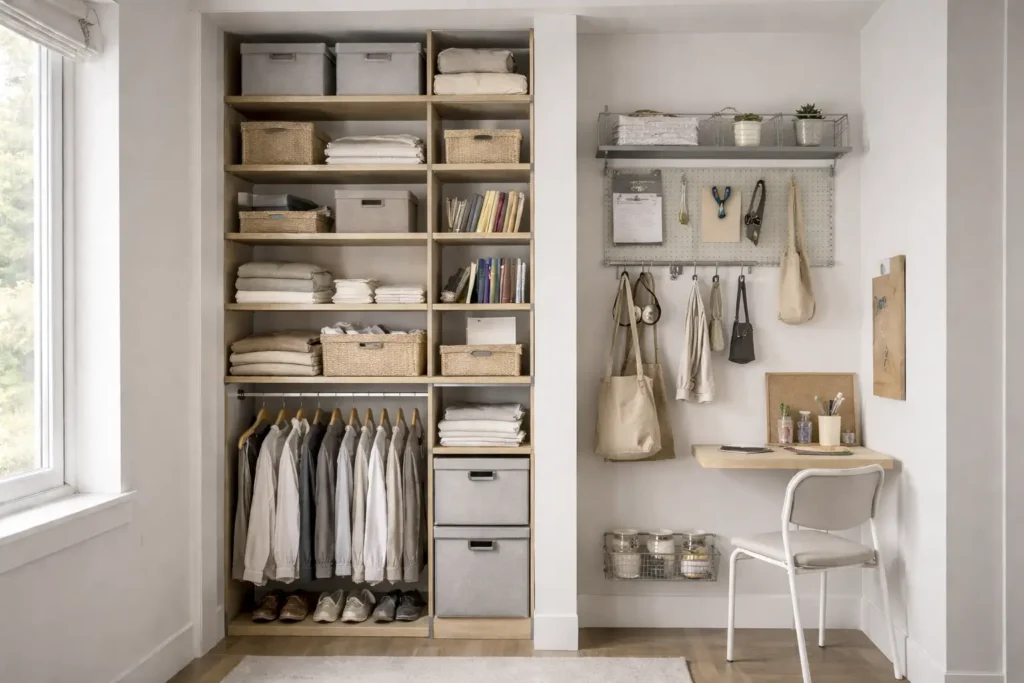
Height must replace width.
Common Causes of Vertical Space Underutilization
Most rooms fail vertically due to structural design choices.
Short Furniture Profiles
Bookcases and cabinets stop below eye level. Upper walls remain empty.
Single-Level Storage Planning
Only one horizontal layer is used for storage.
No Ceiling-Level Activation
Ceiling zones are perceived as inaccessible.
Door Surfaces Ignored
Door backs remain blank despite being full-height vertical panels.
Poor Height Zoning
Heavy and light items are placed randomly across levels.
Vertical storage systems for small rooms correct these structural weaknesses.
Vertical Storage Systems for Small Rooms That Maximize Wall Capacity
Vertical storage systems for small rooms must activate the entire wall from floor to ceiling and often work best when integrated with broader small space storage ideas that distribute storage across multiple zones.
Floor-to-Ceiling Shelving Units
Install tall shelving anchored to studs.
Best practices:
- Adjustable shelf brackets.
- Narrow depth (10–14 inches).
- Heavier items below shoulder height.
- Seasonal items at the top.
Floor-to-ceiling units dramatically increase wall density without increasing footprint.
Wall-Mounted Rail Systems
Rail systems allow baskets, hooks, and shelves to attach vertically.
Applications:
- Bedrooms.
- Kitchens.
- Utility areas.
- Entryways.
Rail grids create modular vertical storage systems for small rooms with flexible configuration.
Vertical Shoe Racks
Slim vertical shoe towers reduce floor congestion.
Use:
- Stackable column racks.
- Pull-out vertical shoe cabinets.
- Wall-mounted shoe rails.
This is one of the simplest ways to free floor area.
Tall Bookcases with Adjustable Shelves
Replace low bookcases with tall units.
Advantages:
- Greater storage per square foot.
- Adjustable spacing.
- Better category segmentation.
Tall bookcases support compact room organization efficiently.
Ceiling Hooks and Overhead Mesh Racks
Ceiling-mounted hooks and racks support lightweight items.
Ideal for:
- Folding chairs.
- Baskets.
- Lightweight storage bins.
Overhead mesh racks convert unused airspace into storage volume.
Vertical Sliding Cabinets
Slim pull-out cabinets (8–12 inches depth) increase storage along tight walls.
Best for:
- Pantry goods.
- Office supplies.
- Folded garments.
Sliding cabinets preserve circulation while expanding capacity.
Vertical Storage Solutions for Compact Rooms
Vertical storage solutions for compact rooms must address overlooked zones.
Corner Vertical Towers
Corners are high-capacity areas.
Install:
- Ladder corner shelves.
- Rotating vertical columns.
- Custom triangular shelving.
Corner systems improve small room organization without blocking pathways.
Over-Door Storage Systems
Doors offer full-height vertical surfaces.
Install:
- Slim rack panels.
- Hanging pocket organizers.
- Metal grid frames.
Over-door solutions increase storage without floor impact.
Narrow Wall Cavities
Small strips of wall between doors and windows can host slim vertical units.
Use:
- 6–10 inch tower cabinets.
- Stackable vertical cubes.
- Adjustable shelving columns.
Narrow vertical units are highly efficient in tight layouts.
Wall-Mounted Fold-Down Surfaces
In work zones, install fold-down desks or foldable tables.
Benefits:
- Converts vertical wall into temporary work area.
- Frees floor when folded.
- Maintains multi-function flexibility.
Pegboard Vertical Systems
Pegboards convert flat walls into adjustable storage panels.
Use:
- Hooks.
- Baskets.
- Small shelf brackets.
Pegboards allow quick reconfiguration without structural renovation.
How to Choose Vertical Storage Units for Small Spaces
The best vertical storage units for small spaces depend on available wall width, ceiling height, and how frequently stored items need to be accessed. The goal is to maximize vertical capacity without making the room harder to use.
Tall Storage Units
Tall shelving units and narrow storage towers work well when floor space is limited but ceiling height is available. Choose shallow designs that extend upward rather than wide furniture that consumes valuable floor area.
Wall-Mounted Storage
Wall-mounted shelves, rails, and modular systems are useful when keeping the floor clear is a priority. They can also be positioned around existing furniture to activate wall areas that would otherwise remain unused.
Corner Storage Towers
Vertical storage towers can turn empty corners into functional storage without interfering with circulation. Narrow designs are especially useful in bedrooms, entryways, and other compact areas.
Choosing the Right Height
Use the full height of the room when possible, but keep frequently used items within comfortable reach. Upper levels are better suited to lightweight, seasonal, or rarely used belongings, while heavier and frequently accessed items should remain lower.
Immediate Fixes to Increase Vertical Capacity
Apply quick upgrades.
- Install one floating shelf above primary furniture.
- Replace low bookcases with tall units.
- Add an over-door storage rack.
- Introduce a vertical shoe tower and relocate rarely used items to under-bed storage solutions to reduce floor congestion.
- Mount one rail system on a blank wall.
- Activate a corner with a vertical ladder shelf.
These steps improve vertical storage systems for small rooms within hours.
Preventive Adjustments for Long-Term Efficiency
Vertical systems must remain structured.
Vertical systems must remain structured. To maintain consistency over time, it helps to follow a complete system, as outlined in this small space maintenance checklist, where daily, weekly, and monthly actions are aligned to support long-term organization.
Height Zoning
Divide storage into three vertical bands:
- Lower zone: daily-use items.
- Middle zone: frequently accessed items.
- Upper zone: seasonal or infrequent items.
Weight Management
Heavy items remain low.
Lightweight items move upward.
Clearance Control
Maintain:
- Walkway width.
- Door swing space.
- Head clearance under shelves.
Anchor Inspection
Check wall anchors annually.
Loose brackets compromise vertical storage systems for small rooms.
Category Segmentation
Group similar items vertically.
Avoid mixing unrelated categories across shelves.
Mistakes to Avoid in Vertical Storage Design
Avoid these errors.
Deep Shelves in Narrow Rooms
Depth beyond 14 inches reduces mobility.
Overloading Upper Shelves
Excess weight weakens brackets.
Blocking Windows
Natural light must remain unobstructed.
Ignoring Ceiling Height
High ceilings require additional shelf layers.
Filling Every Shelf Completely
Leave visual spacing for accessibility.
Vertical storage systems for small rooms perform best when density is controlled.
System Upgrade: The Vertical Layering Framework
Apply this structured method.
Step 1 — Measure Total Height
From floor to ceiling.
Step 2 — Define Three Height Zones
Lower, middle, upper.
Step 3 — Assign Function by Frequency
Daily items below shoulder height.
Seasonal items above.
Step 4 — Install Modular Components
Combine:
- Floor-to-ceiling shelving.
- Rail systems.
- Pegboards.
- Narrow sliding cabinets.
- Over-door racks.
- Ceiling hooks.
Step 5 — Evaluate Circulation
Confirm:
- No blocked paths.
- No reduced door swing.
- No obstructed windows.
This framework transforms unused wall height into controlled storage capacity.
Conclusion
Vertical storage systems for small rooms increase usable capacity by activating wall height, corners, doors, and ceiling zones. Floor-to-ceiling shelving, sliding cabinets, vertical shoe towers, rail systems, and overhead racks expand storage without increasing footprint. Height segmentation protects circulation and maintains efficiency.
Vertical expansion replaces horizontal congestion.
Key Takeaways
- Extend storage upward before adding furniture.
- Activate corners, doors, and narrow wall cavities.
- Use modular rail and pegboard systems.
- Install tall shelving instead of low units.
- Separate storage by height and weight.
- Inspect anchors annually.
- Avoid deep shelves in tight rooms.